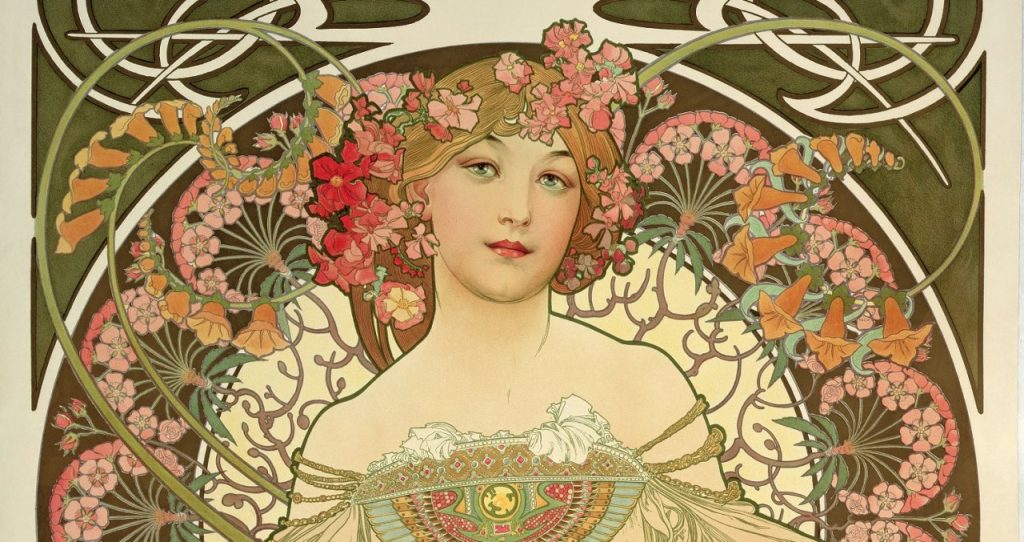
Alphonse Mucha was born on July 24th, 1860, in the Czech Republic. He continued his education due to his talent for singing, but his true passions were in the arts. Though the Academy of Fine Arts in Prague rejected him, Mucha did not give up on painting. He became an apprentice working for a theatre scene-painting firm. He then made a living through portraiture. His skills were recognized; finally, he was given the privilege to go through with traditional education.
His true career began when he got a position as the primary advertiser and art director at a theatre for the actress Sarah Bernhardt where he would design not only her posters but also costumes, jewelry, and sets. It was then he would develop his signature style of idealized women and dramatic atmosphere.
Mucha had an affinity for his nations culture and much of his artwork incorporated decorative elements nodding to it. His works also created much of their own culture through their influence.
His posters quickly became immensely popular as his style was something people had never seen: Luxurious hair, muted palette, organic lines, theatrical composition, and grandeur that was in contrast to the bolder aesthetic that was common at the time. After some time creating masterpieces for Bernhardt, he also started to bring the ethereal idealized style into his commercial works, still using Bernhardt as his muse to create the ‘modern woman’ in his works through her image.
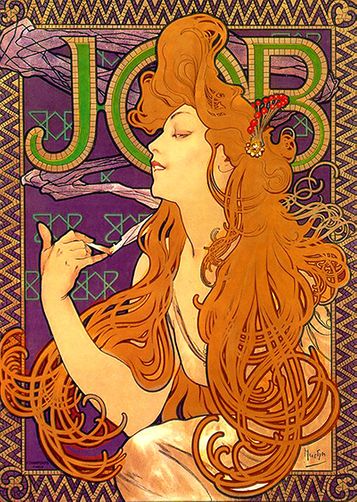
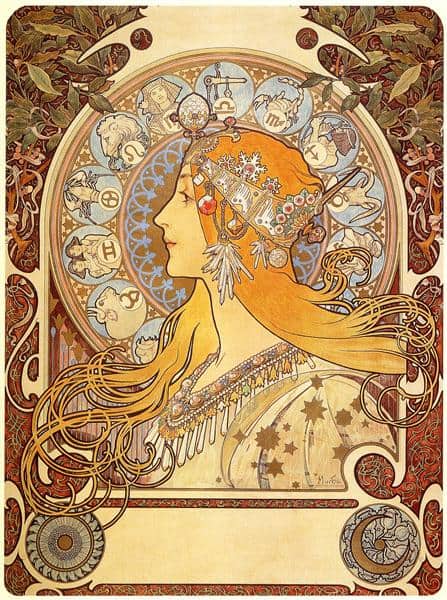
Although he refused the label of art nouveau being associated with his works, he significantly influenced the movement and took an influential part in popularizing it. However, he thought art nouveau was fleeting, whereas art should last. Mucha’s posters were visible to everyone passing by and purchasable at a much more affordable cost than many other pieces in art nouveau such as tiffany lamps. Mucha was one of the most prized artists in the world, having many notable commissions and collaborations throughout his career.
His statement would prove true in that the art nouveau style would end, but he was also correct that his work would live on. Mucha’s works now sell in auctions for hundreds of thousands of dollars. Even after his death, his posters and designs continue to inspire others.
Sources:
https://johnstoi.web.viu.ca/praguepage/muchalecture.htm
https://www.britannica.com/biography/Alphonse-Mucha
https://www.artsy.net/article/artsy-editorial-alphonse-muchas-iconic-posters-define-art-nouveau
https://www.antiquetrader.com/feature-stories/alphonse-mucha-celebrated-art-nouveau-artist
Leave a Reply