

Most of Alphonse Mucha’s popular legacy is deep-seated into his famous Parisian posters of beautiful women posing for theatrical and commercial purposes… But, Mucha personally felt he was truly meant to create more meaningful art than just those works. He had always wanted to try Historical painting, and wanted to complete a series to display the accomplishments of Slavic Peoples in Europe throughout history since he was young. Once he had the ideas for this great project, he went to take photographs and sketches in Slavic countries like Russia and Poland to the Balkans in 1908 and 1909.
“I will be able to do something really good, not just for the art critic but for our Slav souls.” – writing from Alphonse Mucha to his wife in 1910.
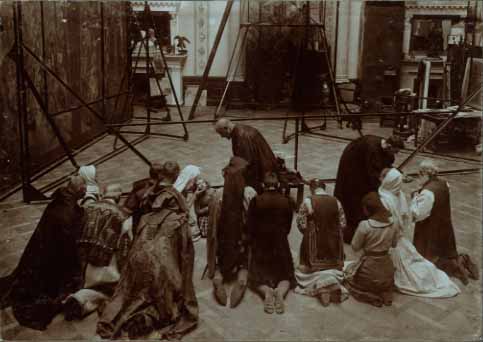
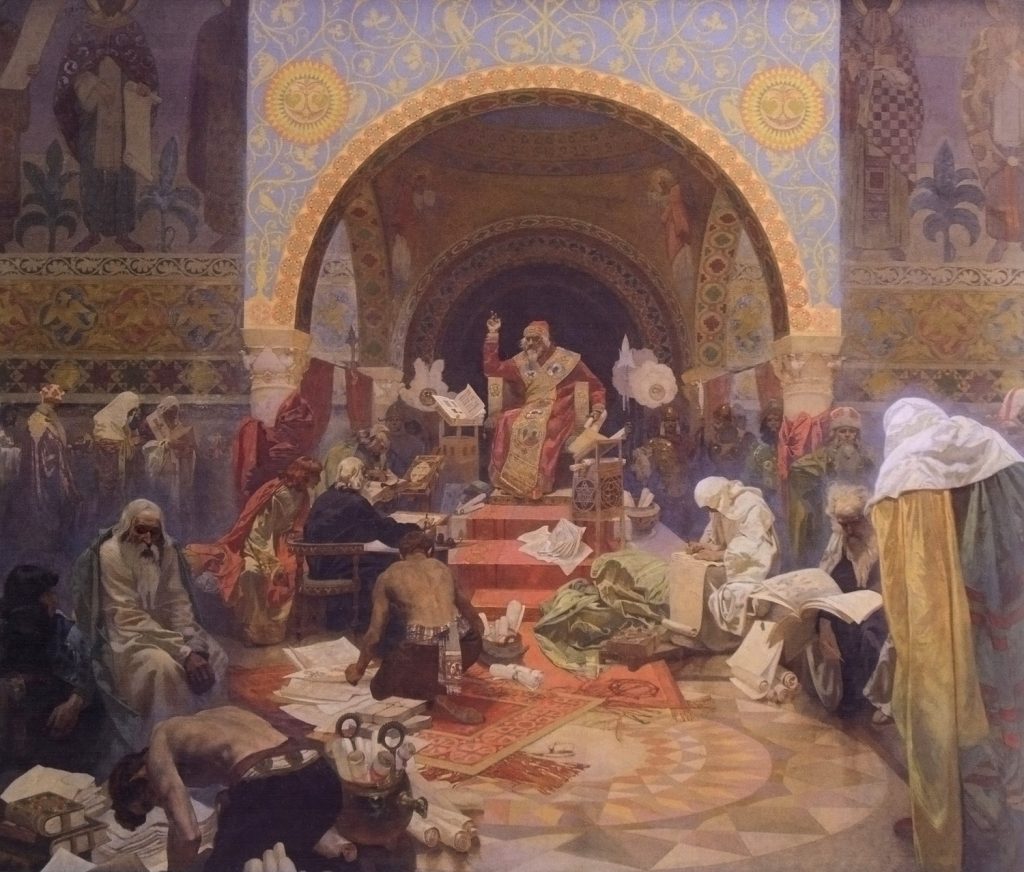
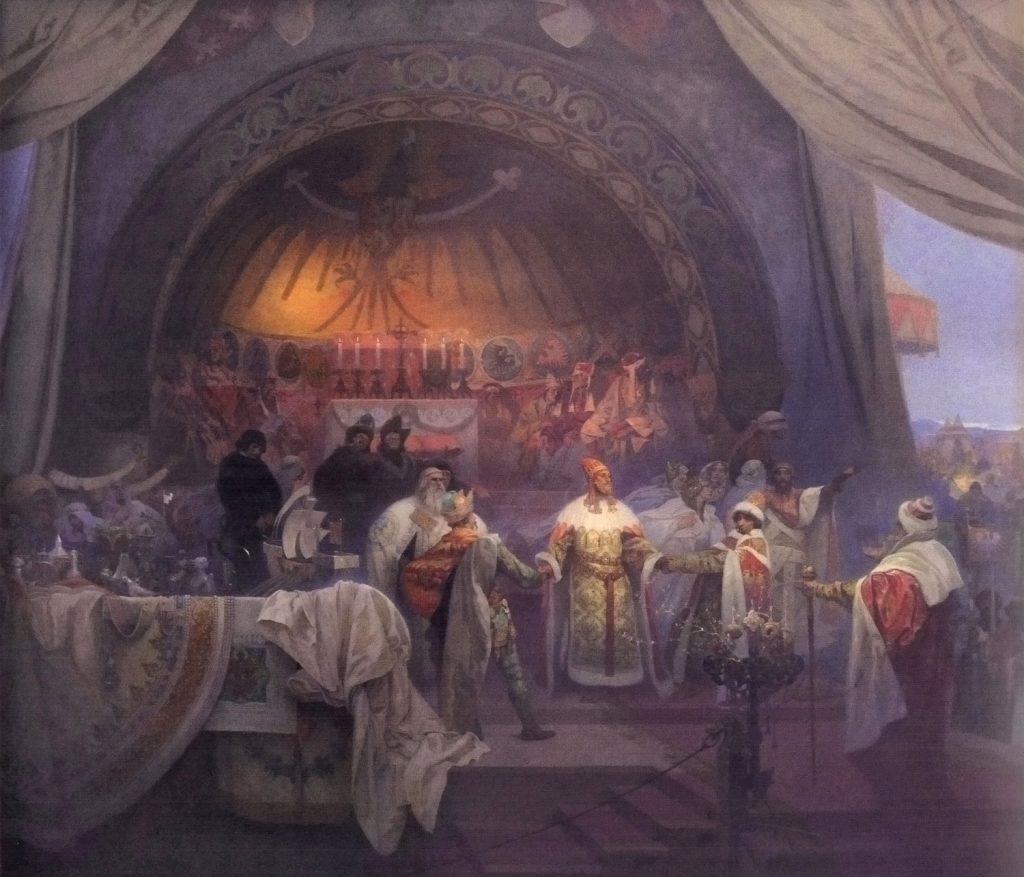
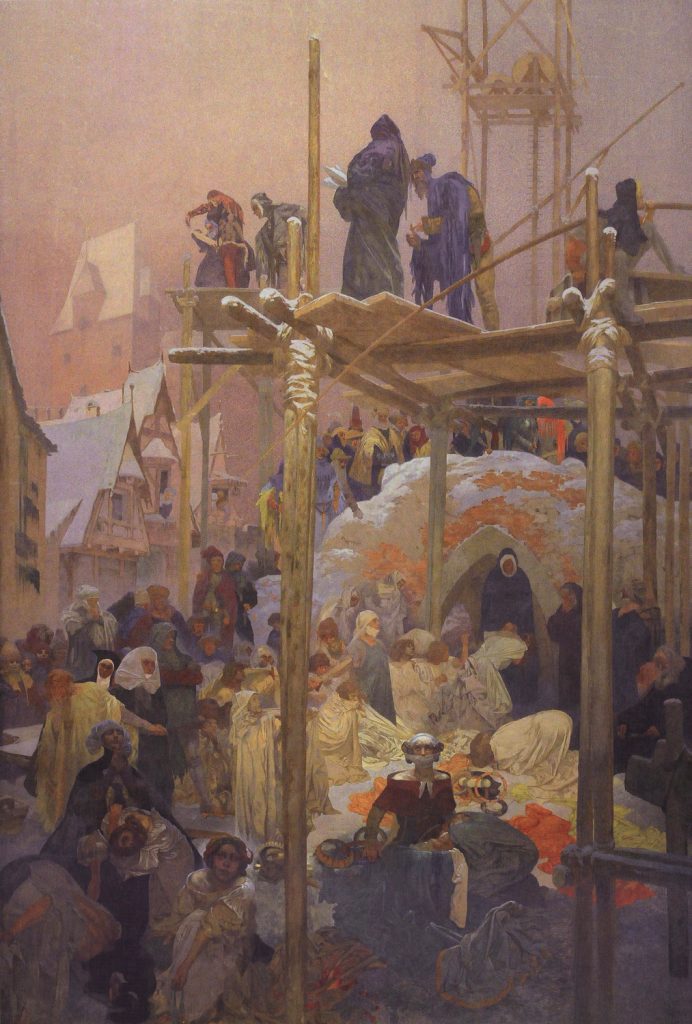
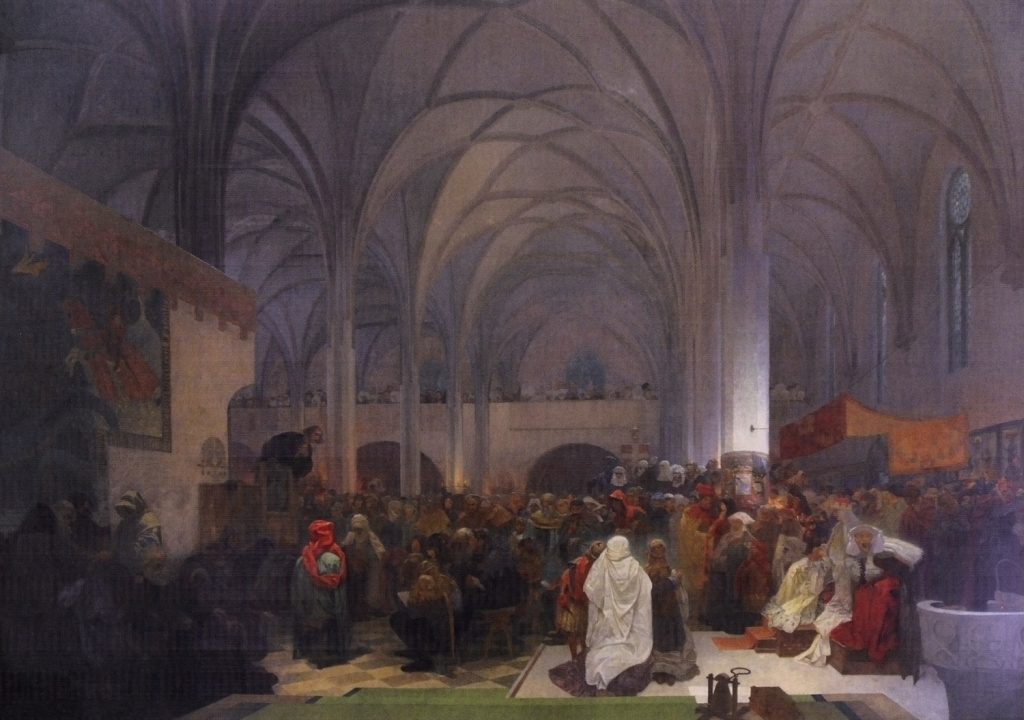
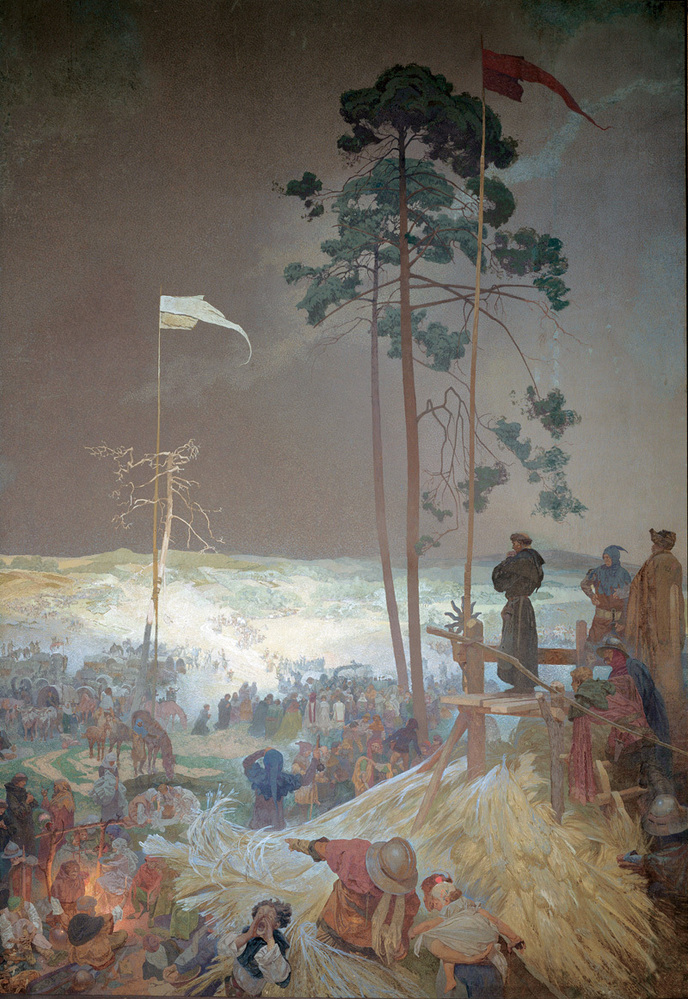
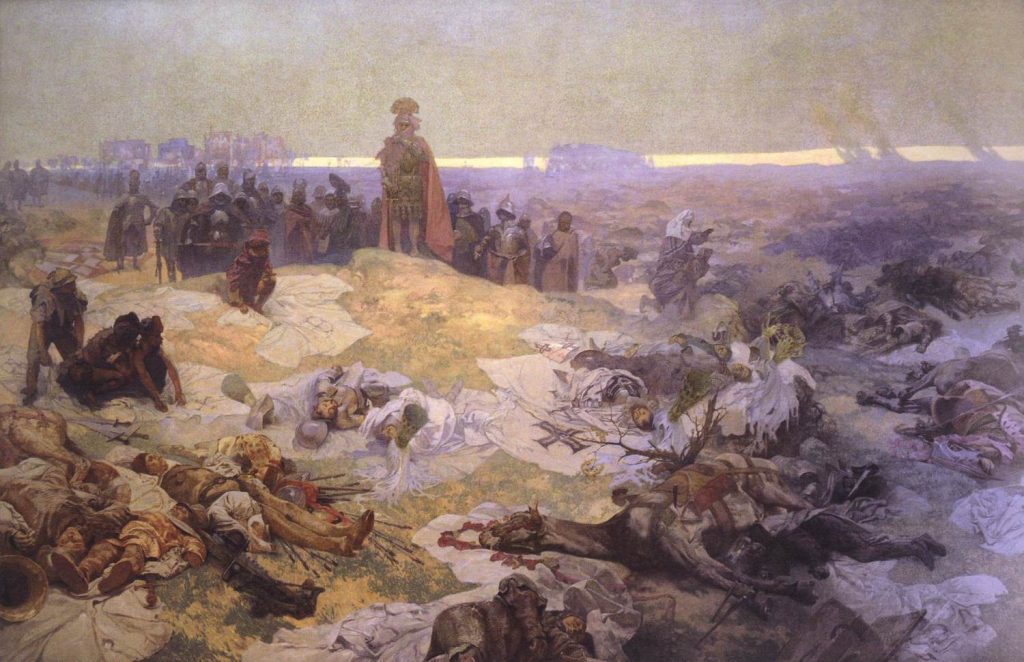
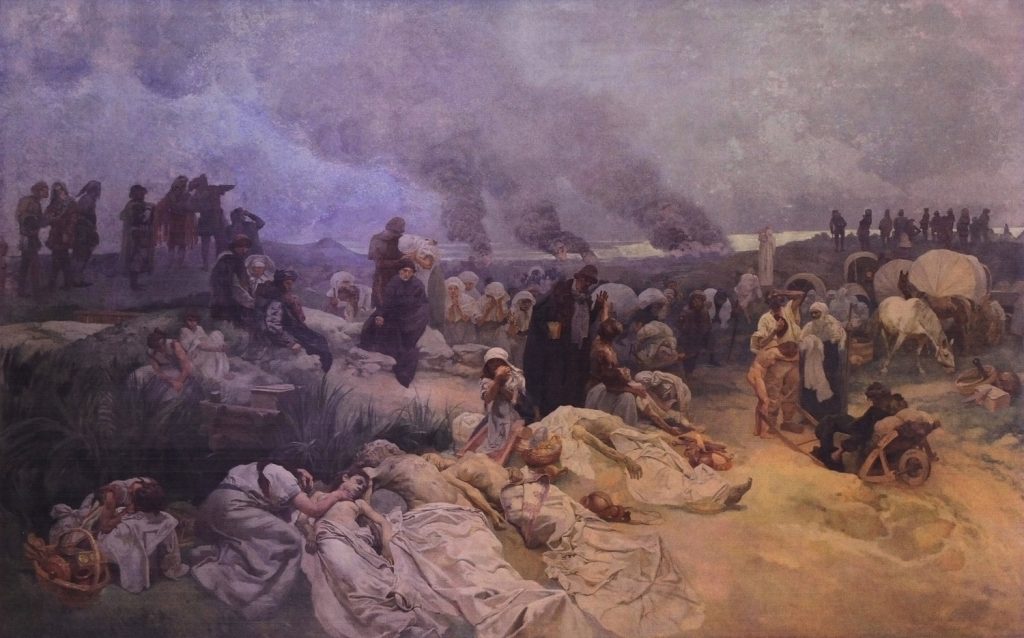
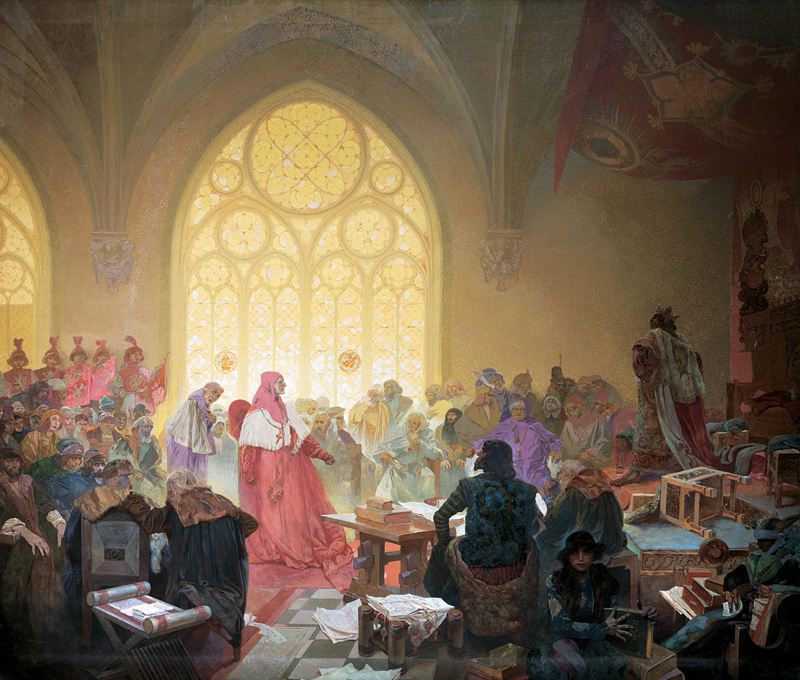
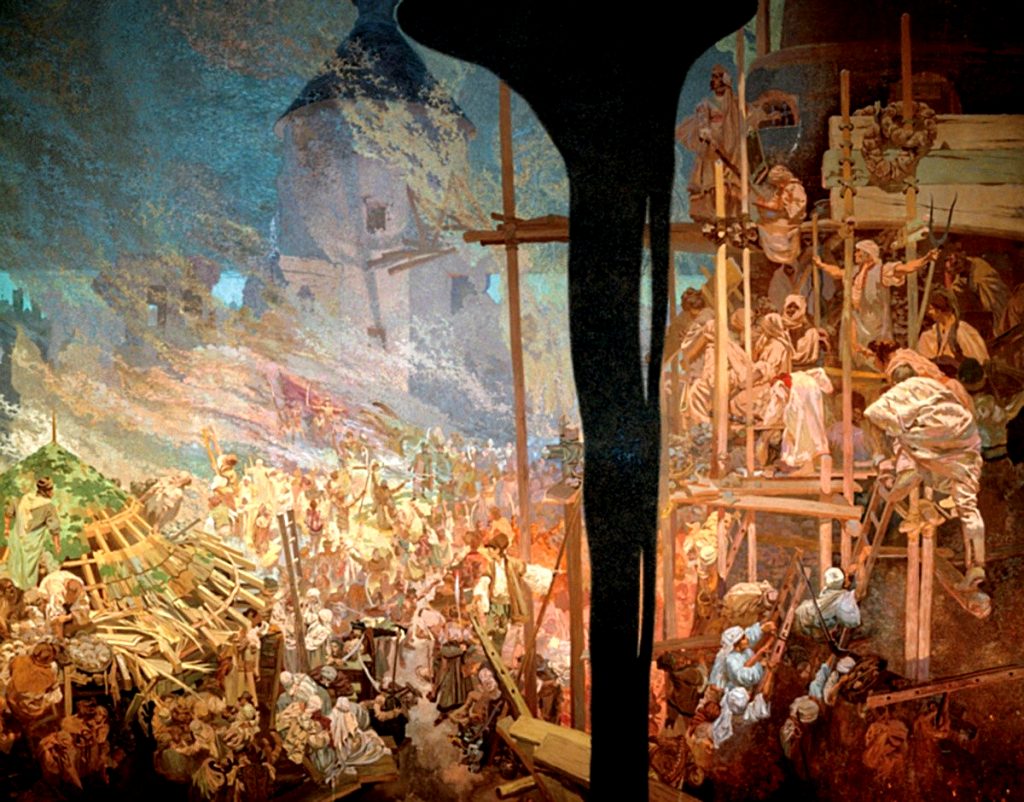
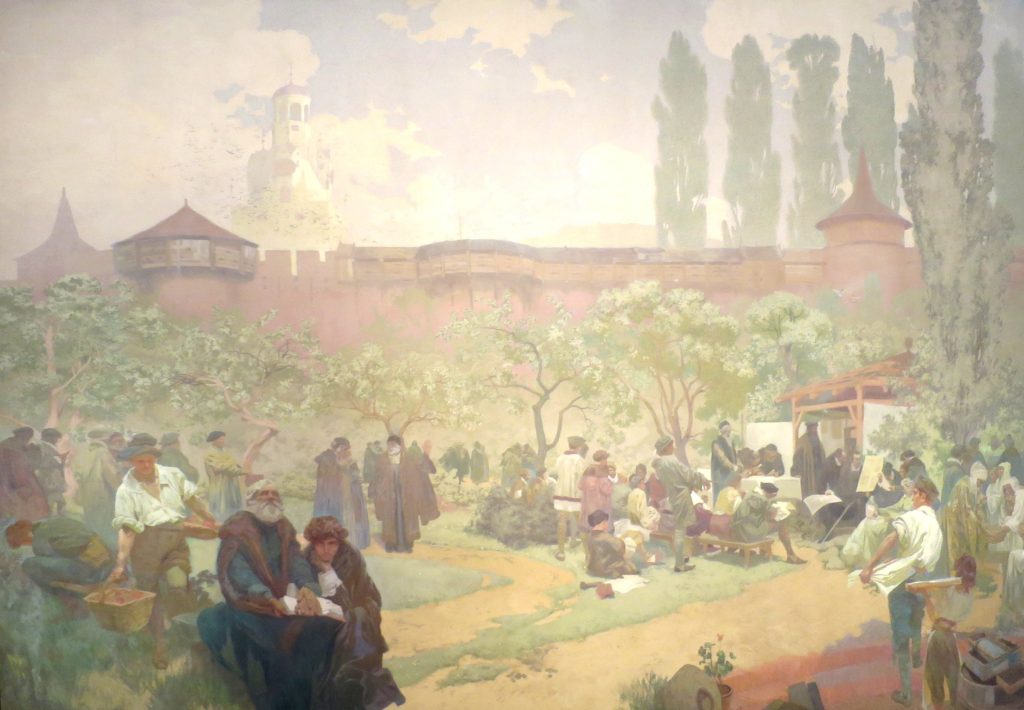
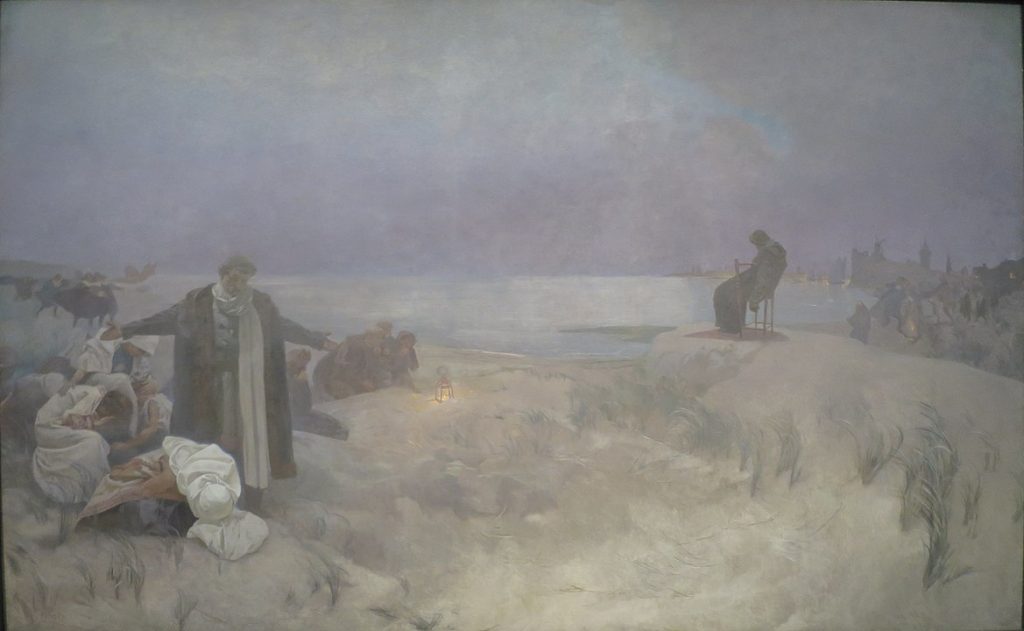
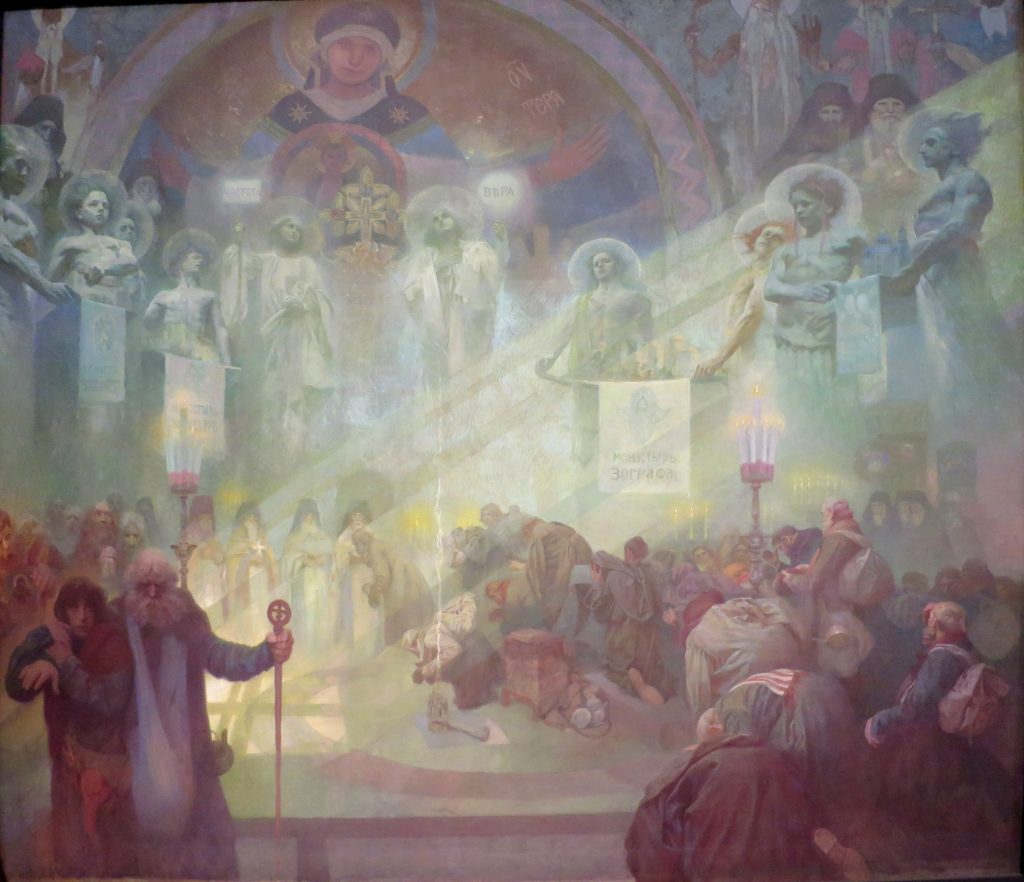
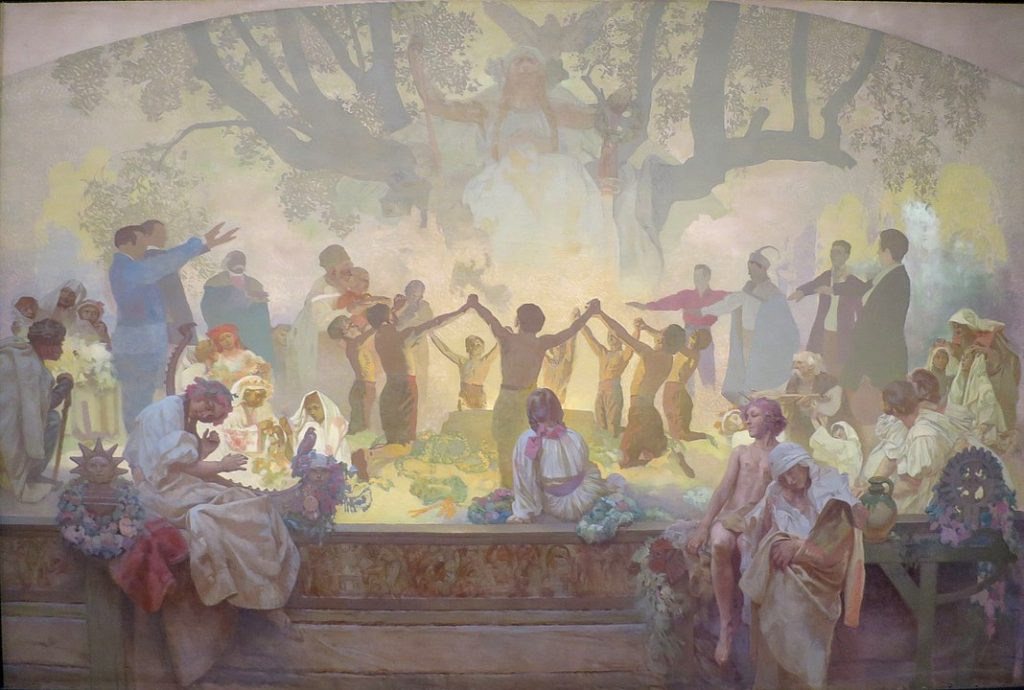
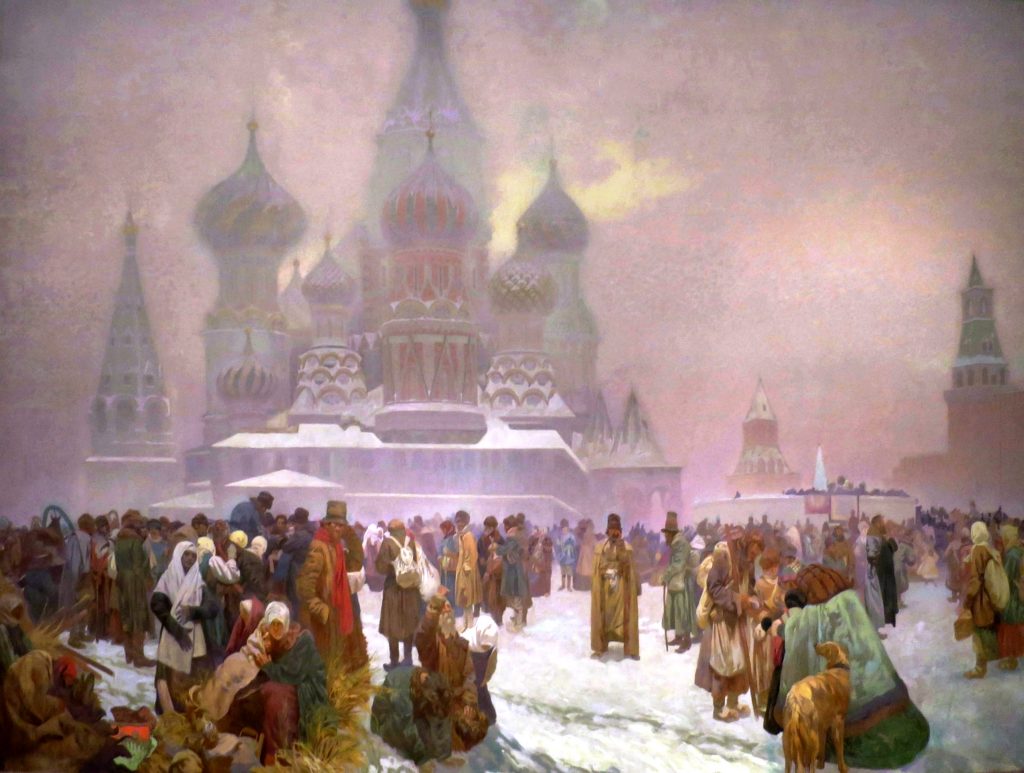
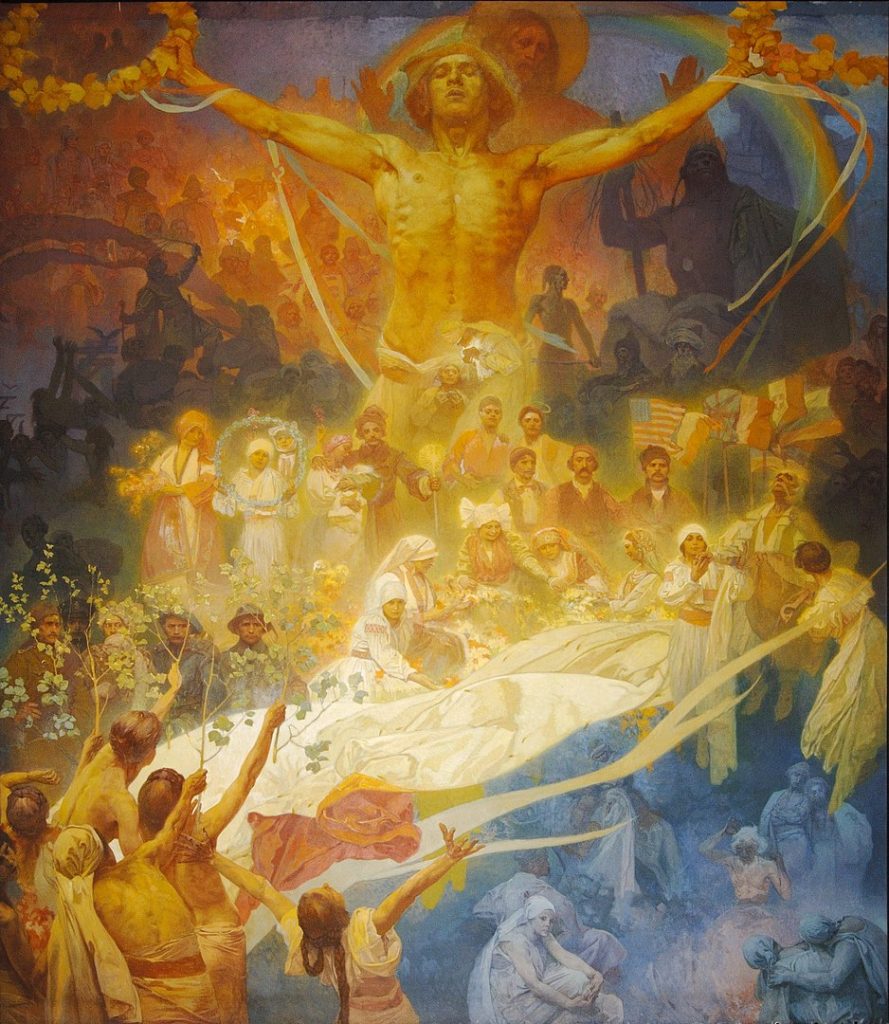
The Slav Epic displayed many patriotic messages , He wanted to make sure that these pieces properly respected and celebrated the great historical achievements of the Slavic Peoples, Including Czechs, Russians, Poles, Serbs, Hungarians, Bulgarians, and the Balkans, not to forget the Orthodox monasteries of Mount Athos. Once he received funding for this great project from millionaire and revolution promoter Charles R. Crane, Mucha continued to create the twenty mural-sized (measured six by eight meters) paintings depicting the history of the Czech and the Slavic peoples. To paint them, he rented and lived in an apartment and a studio in the Zbiroh Castle in western Bohemia until 1928 when he finished. He had help from many costumed models, using both still and motion picture cameras to set the scenes with his models, and encouraged them to create their own poses. It took him 16 years to fully complete them all. He bestowed them to the city of Prague in the same year and they received great praise.
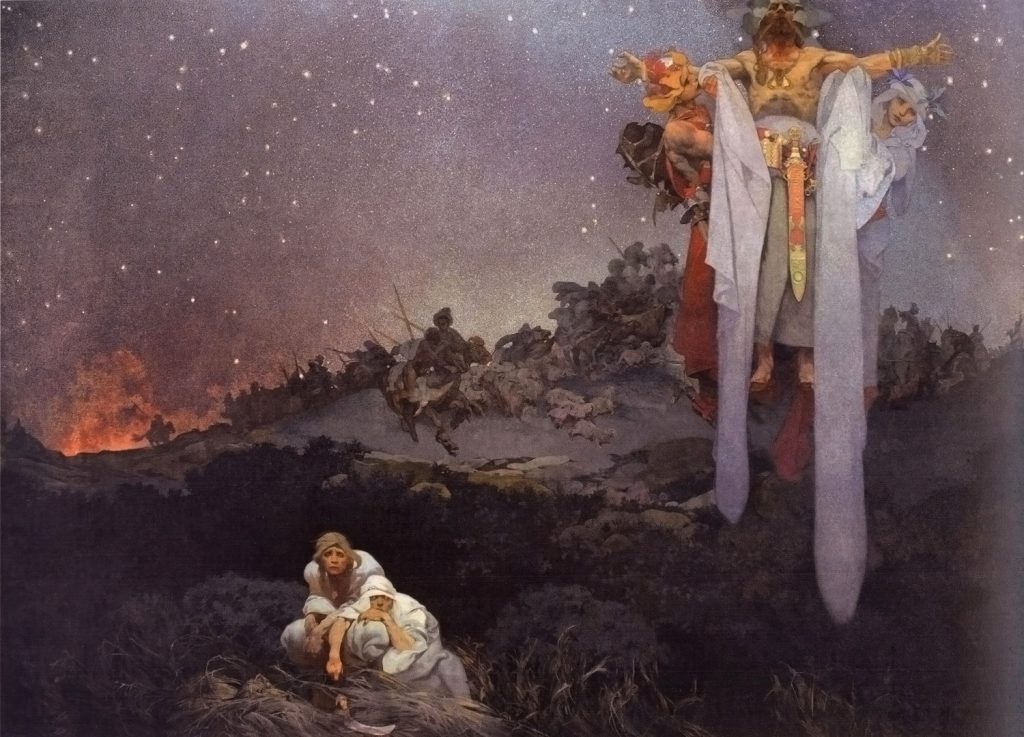
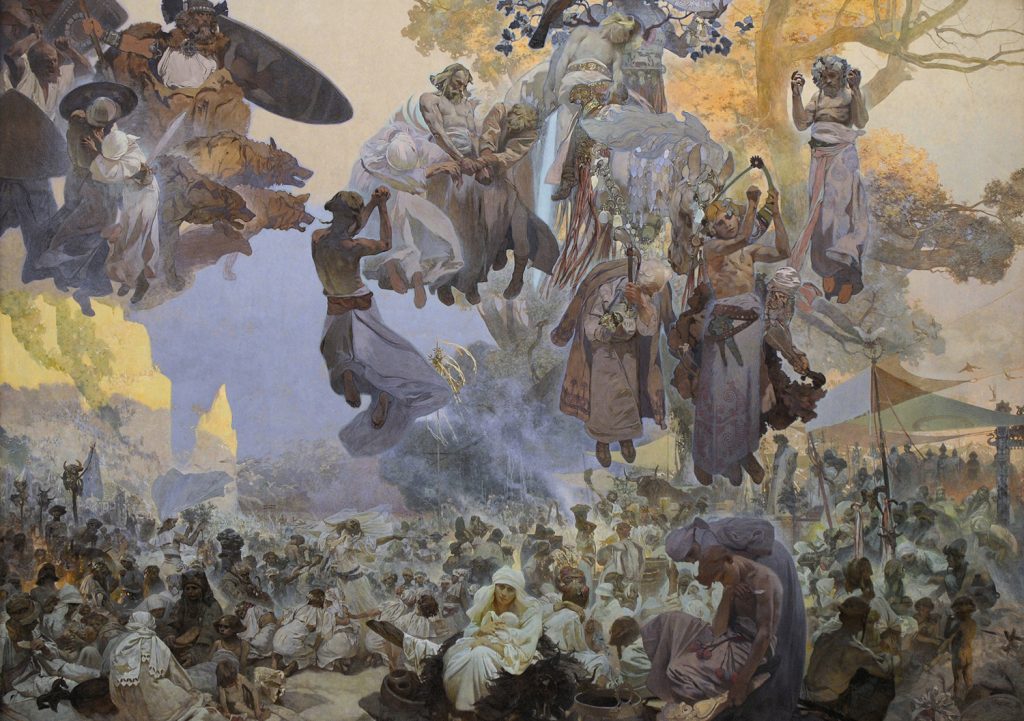
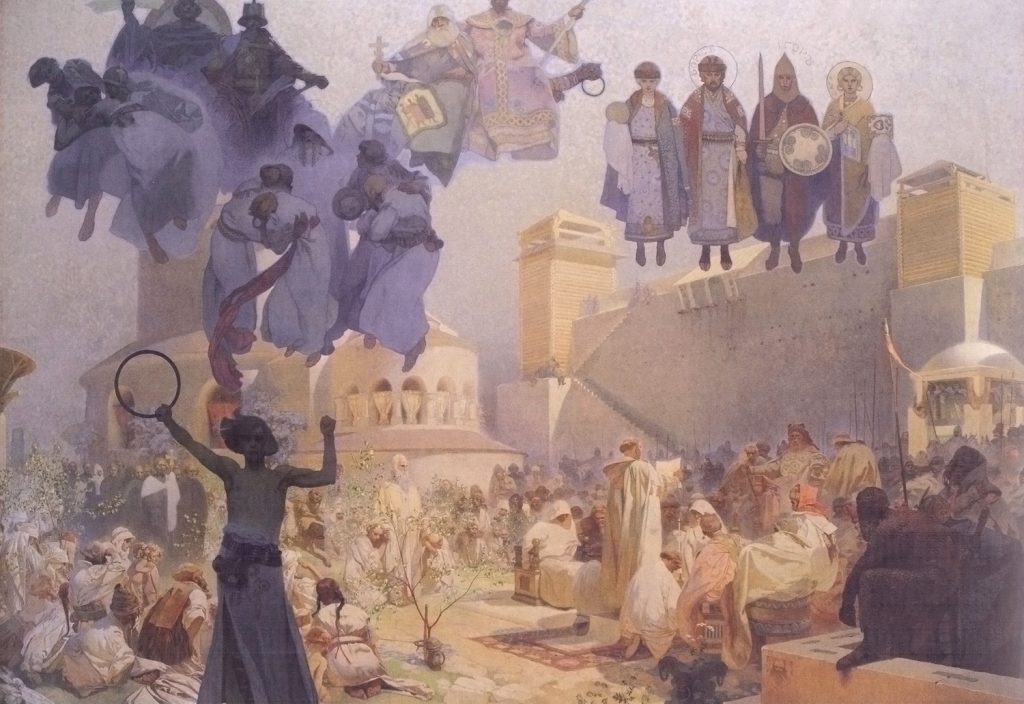
by Alphonse Mucha, 1914/1915
In the late 1939, fascism was already starting to rise in popularity. German troops marched into Czechoslovakia and Mucha, a Slavic Nationalist and a Freemason, was among the first people to be arrested by the Gestapo. A lung infection started to affect him during the intense arrestment and interrogation process. When they released him, he never recovered from the poor conditions of his internment and also seeing his home invaded and overcome. He died in Prague on July 14, 1939 of pneumonia.
Mucha being known best for his work in the Art Nouveau movement was something he wasn’t a very big fan of.
“What is it, Art Nouveau?”…“Art can never be new.”
– Alphonse Mucha, a quote from his biographer and son, Jiří Mucha.
He instead took the greatest pride in his work as a history painter for The Slav Epic, which he considers his greatest masterpiece and is the work that is most spiritually tied to him and his birthplace. The pieces were rolled and stored away to be protected from the Nazis for twenty-five years before being shown at the chateau in Moravský Krumlov, the South Moravian Region in the Czech Republic in 1963. The pieces are currently being moved to be displayed in the Thomas Heatherwick-designed Savarin opening later in 2026.



Information Sources:
“Alphonse Maria Mucha Biography in Details.” Alphonse Maria Mucha Biography With All Details, 2002, https://www.alfonsmucha.org/biography.html
Wikimedia Commons. “Alphonse Mucha.” Wikipedia, Wikimedia Foundation, 6 Nov. 2022, https://en.wikipedia.org/wiki/Alphonse_Mucha
“About Alphonse Mucha.” Serpent Publishing, 2022, https://serpentpublishing.com/about-alphonse-mucha.html#the-slav-epic