Since the invention of the poster, it has been a consistent form of presentation for designers and illustrators alike. With its versatile purpose, its longevity is undoubted and it has been around since the mid-1500s when the printing press was invented. Before, there could only be one copy of the information and had to be placed in a common place for the word to be spread. Now, posters are being put up everywhere, it was so much to the point where the placement of posters had to be restricted.
Advertising
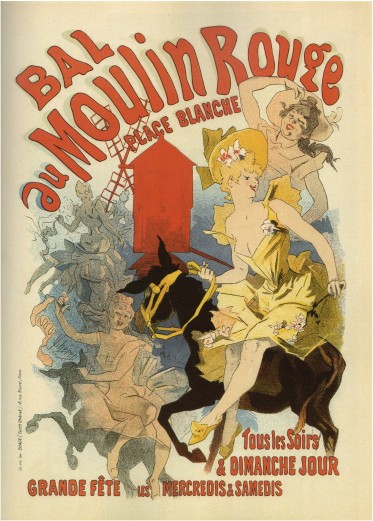
Living in a capitalistic society, one of the first uses of posters was to advertise. Clubs that needed promotion, and products that needed to sell; there was a high demand for posters once lithography was introduced to the public. At first, the lithographers and printers were in charge of the posters. However, the demand for quality grew exponentially and being unable to keep up with the requests, thus designers and illustrators were called into the market. Later on during the Civil War, there was increased use of advertising posters. This happened due to the rise of consumerism as women worked in the factories while the men were at war, and with no time to make their own products and household goods, many of them turned to rely on companies mass producing these goods.
Political, Social Commentary, and Propaganda
Another use of posters would be to simply send a message. During the World War, there was a heightened use of posters meant for propaganda purposes, to recruit people to join the army, and to remind citizens to stay loyal to the country. To fight back, there would be posters meant to incite revolutions and to make social or political statements. However, there is one incident of unintentional homoerotic Chinese-Soviet communist propaganda posters. This was to promote unity between the two countries.

Art
Posters were used to express creativity as well. In the 1950s, there was a resurgence in the use of type due to the International Typographic Style which was developed in Switzerland, with the introduction of San Serif. During the 1960s, psychedelic graphics were created with the elements produced by the Art Nouveau movement.

Conclusion
Throughout history, there were many uses of the poster, there are some of the great significance that are still being echoed today. In the current age, it has evolved into being able to live completely digitally or online. I believe a poster is an irreplaceable tool that designers can use to deliver their message and I find it interesting that even after centuries, we still find new ways to reinvent this tool and still effectively communicate with the audience.
Reference
Cords, S. (2022, April 11). The history of the poster – DW – 04/11/2022. dw.com. Retrieved November 11, 2022, from https://www.dw.com/en/from-art-to-advertising-the-history-of-the-poster/a-61424572#:~:text=French%20artist%20Jules%20Cheret%20became,1%2C200%20posters%20in%2040%20years
Early advertising of the West, 1867-1918. ::: Early Advertising of the West, 1867-1918 ::: (n.d.). Retrieved November 11, 2022, from https://content.lib.washington.edu/advertweb/index.html
Rhp. (2021, November 28). The unintentionally homoerotic Chinese-soviet Communist propaganda posters, 1950-1960. Rare Historical Photos. Retrieved November 11, 2022, from https://rarehistoricalphotos.com/chinese-soviet-propaganda-posters/
V&A · A short history of the poster. Victoria and Albert Museum. (n.d.). Retrieved November 11, 2022, from https://www.vam.ac.uk/articles/a-short-history-of-the-poster#:~:text=The%20pioneering%20French%20poster%20artist,by%20Alois%20Senefelder%20in%201798.