The Industrial Revolution brought about all kinds of changes to society. It created new wealth and opportunities for investors and merchants and they would proudly show it off. One way women could display their wealth was through fabric. The style at the time was very ostentatious. Women wore giant hoop-skirts, corsets and bustles which all looked quite exaggerated.
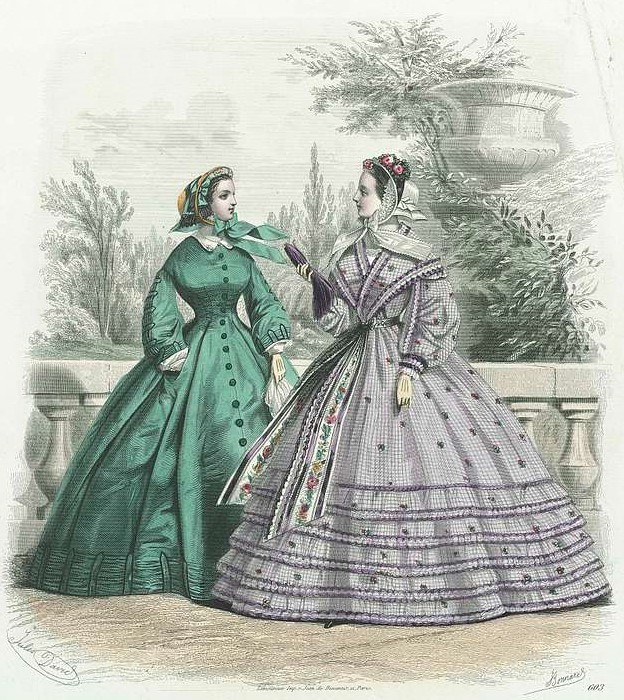
Because so much fabric was used in skirts, most women didn’t own that many outfits, but for variety they owned detachable collars and cuffs which allowed them to change their outfits slightly. Naturally, wealthier women owned had more clothes made from finer fabrics.
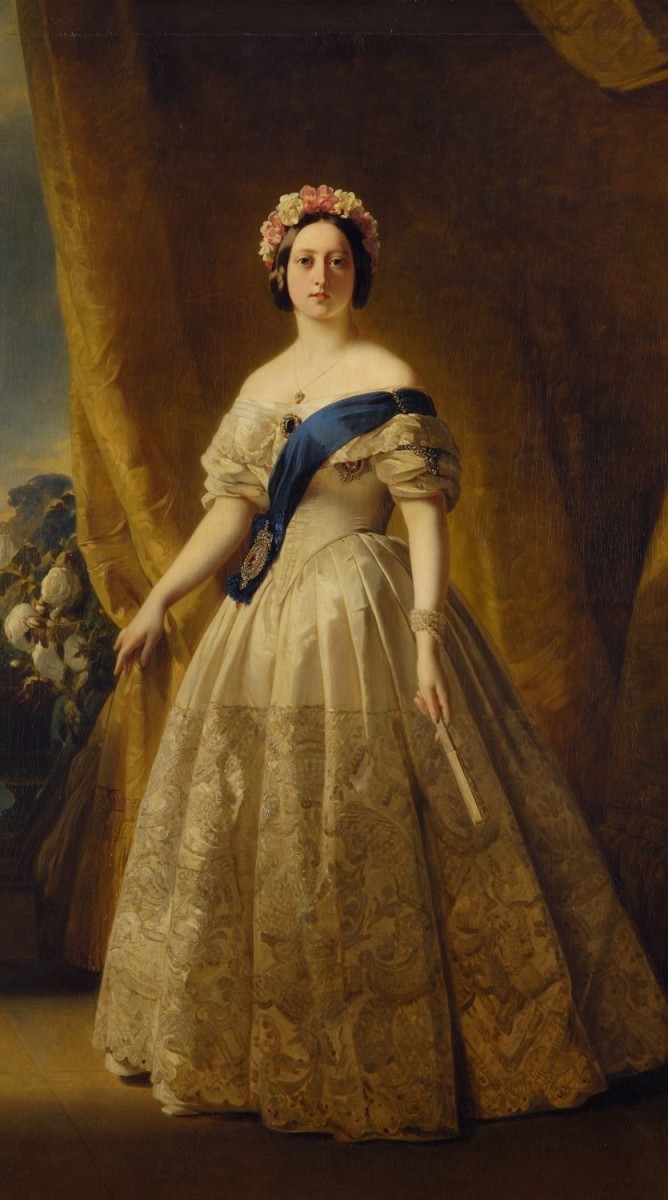
During the romantic period, Gigot sleeves were a major trend but in the 1830s large sleeves were replaced by slimmer, more fitting sleeves. Victorian Fashion placed a lot of emphasis on the ‘prim and proper’ feminine ideal, and one way this was achieved was through highlighting the waist. Corsets were used to create a narrow waist and cartridge pleats gave volume to the skirt without adding bulk to the waist. Another key aspect were the dropped shoulder lines which were supposed to make women look more demure. Corsets were not only uncomfortable for women but also did great harm to their health; it could cause anemia and internal damage to their organs and lead to birth defects.
A decade later, in the 1840s, skirts became larger to emphasize the hourglass shape, shoulders dropped a little more and bodices were more of a V shape. Evening wear was similar, although shoulders and neck were usually more exposed and corsets didn’t have their straps. Later on, bonnets became popular and were either plain or ornate.
Most women during the time had long ringlets or had their hair up in a bun. Some women crimped their hair as well. Make up was minimal except for those in theatre and skin was pale with the exception of blush on the cheeks.

Skirts grew bigger and more exaggerated with time, and were made out of crinoline which derived from horse hair which was both expensive and hard to clean. Instead of adding layers of petticoats, the crinoline cage was invented to give the look that was most popular at the time. It soon became more economical so women in the lower class were able to wear it as well.
Soon after, sewing machines have revolutionized the world of fashion. Now clothing was more accessible and could be produced at a faster rate and more economical for everyone.
Victorian fashion certainly was very unique and was a reflection of the period during that time.
Citations:
Monet, Dolores. “Women’s Fashions of the Victorian Era: From Hoop Skirts to Bustles – 1837 – 1901.” Bellatory, 27 Nov. 2018, https://bellatory.com/fashion-industry/Fashion-History-Victorian-Costume-and-Design-Trends-1837-1900-With-Pictures.
Leave a Reply