Marie Françoise Gilot

Françoise Gilot is a French cubist painter, she was born in Neuilly-sur-Seine, a commune in France in 1921. Today she is still alive and painting at age ninety-nine! Gilot’s father was a strict businessman while her mother was a watercolour painter. At a young age Gilot knew she wanted to be a painter, but her father was against this notion and pushed her into law. She started law school in her late teens. Gilot then dropped out when the Germans invaded Paris for security reasons but also to follow her true passion in art. Gilot met Picasso in a café in 1943, she was twenty-one while he was in his sixties. They started an affair that lasted ten years and had two children. But Picasso grew to be tyrannical and abusive, so Gilot chose to end it. She was notably his only mistress to be the one to walk away from him, in retaliation Picasso drove her out of France by badmouthing her to the whole industry. To escape Picasso’s influence, she moved to America and ever since has enjoyed a successful career and life.
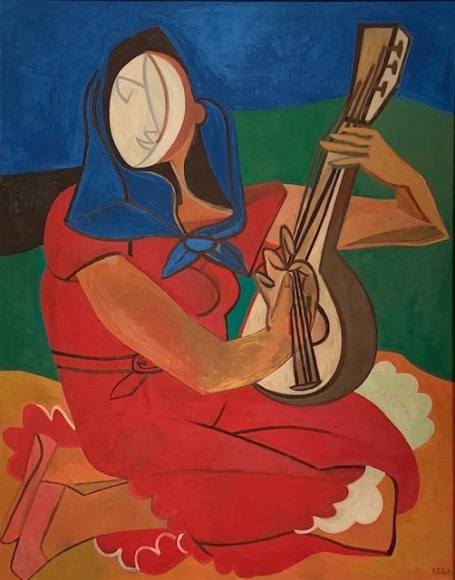
Joueuse de Mandoline, 1953.

Gilot’s art is bold and confident, much like the artist herself. She tends to gravitate making primary colours the star of the show. Many ask her if Picasso was her main influence, but she has asserted that she only studied his art as much as any other painter at the time. If anything, meeting Picasso made her retract into her own style. Picasso’s biographer John Richardson has corroborated this saying: “Picasso took from her rather more than she took from him.”.
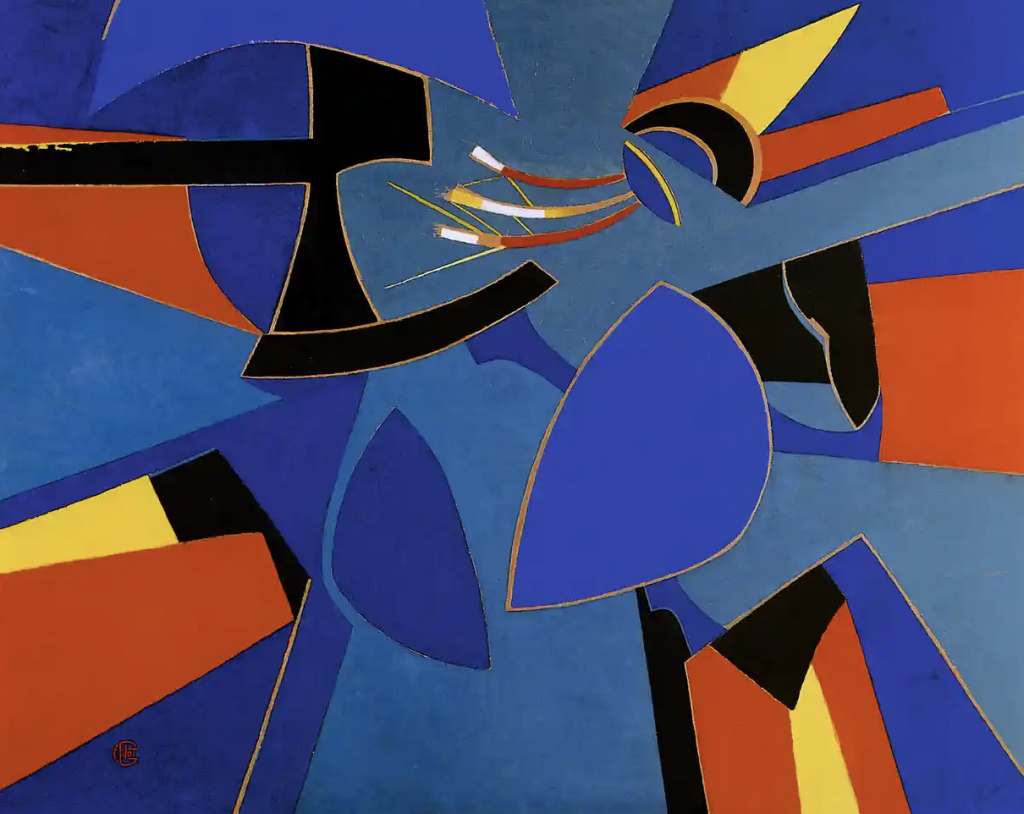
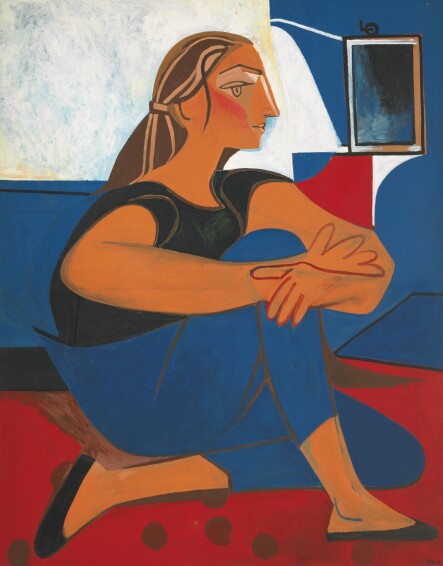
Runaway Comet (1998)
Étude bleue
Living Forest

My favourite piece of hers is this portrait. I’m drawn to her use of contrasting blue and yellow, the added square patterns is also very eye catching and interesting.
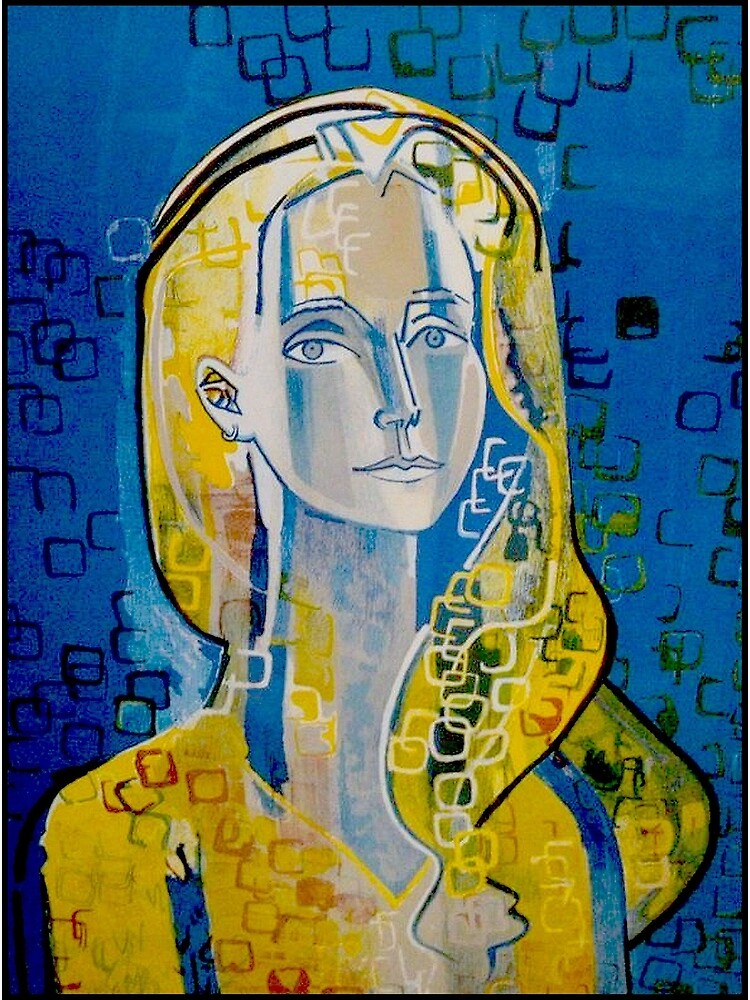
Portrait

References

© Boris Lipnitzki / Studio Lipnitzki / Roger-Viollet. (2020, October 9). At home with Françoise Gilot. Curbed. Retrieved November 22, 2021, from https://www.curbed.com/2020/10/inside-artist-franoise-gilots-apartment-and-art-studio.html.

Françoise Gilot. Artnet.com. (n.d.). Retrieved November 22, 2021, from http://www.artnet.com/artists/fran%C3%A7oise-gilot/.

Guardian News and Media. (2016, June 10). ‘it was not a sentimental love’: Françoise gilot on her years with Picasso. The Guardian. Retrieved November 22, 2021, from https://www.theguardian.com/artanddesign/2016/jun/10/francoise-gilot-artist-love-picasso.
Survey #6 – Stitching Comfort – The Creation of Teddy Bears

Proto-friends

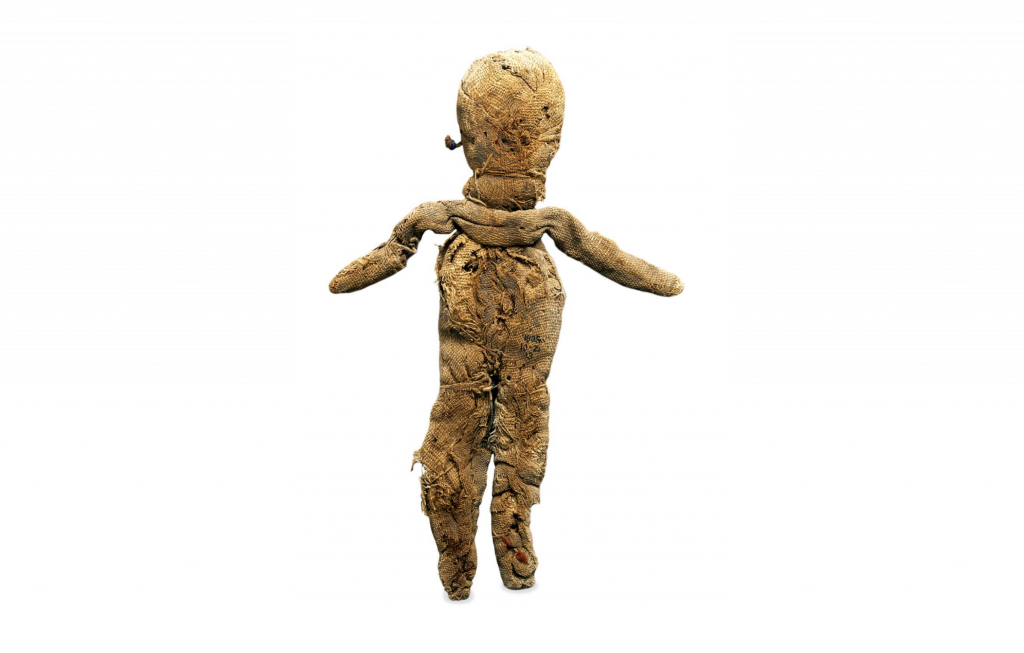
Teddy bears and by extension plush animals are so engraved in our culture it seems that we were never without them. A child automatically must have at least one favourite stuffed friend it’s practically a childhood constant. A soft friend dulls the rough edges of life, a world without our cotton companions seems rather grim. A predecessor to stuffed toys originated in ancient Egypt where they would carve dolls of people and animals out of wood and clay. These toys have been found to date back to 1100 BCE. A more direct predecessor to stuffed animals are rag dolls! Ragdolls are dolls made from pieces of clothes; the oldest rag dolls were once again found in Egypt around the 1st to 5th century. They were inexpensive to make, making them accessible to all social classes. When mass production of dyed fabric became more common in 1830, rag dolls became even more accessible. They were used as both an object for playing and a tool for education. Children were encouraged to repair their dolls themselves and make new clothes, teaching children how to both sew and nurture. 

A Roman ragdoll created during 1stC-5thC. It’s endearing how humans will always find a way to make toys.

How Elephants Changed our Childhoods 

Appolonia Margarette Steiff is the woman often credited to be the creator of the first stuffed animals. Steiff was born on July 24th 1847 in Giengen an der Brenz, a town in Germany. When Steiff was just 18 months old, tragedy struck. She fell ill with polio, which left her completely paralyzed in her left leg, and restricted use of both her right leg and right foot. Although her family supported therapy and surgeries nothing helped Stiff’s mobility issues. At age 17 Steiff went to sewing school. By 1877, Steiff became a local tailor in her studio at home. On a faithful day Steiff found a cloth elephant pattern in a magazine, inspired by this she made some plush elephants and sold a few as a hobby. They were an instant hit with children and Steiff added more animals that she’d sew. Margarete Steiff Toy Company was then founded in 1880.

An original Steiff elephant, it was originally made as a pin cushion but kids loved playing with it.

The Hunt for Teddy 

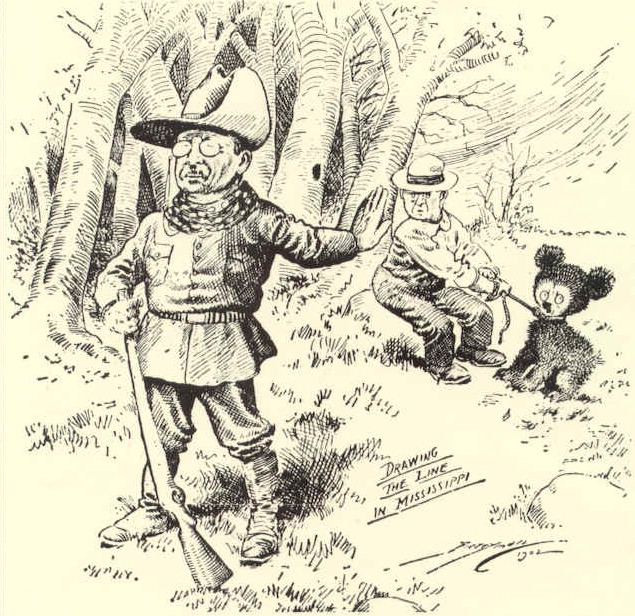
           Almost instantaneously, In 1902, a toymaker and Russian immigrant Morris Michtom saw a political cartoon about how President Theodore Roosevelt fought verbally against his hunting team on killing a bear cub. Teddy famously showed compassion to the cub when no one would. This political cartoon inspired Michtom to make the first teddy bear! The name teddy bear originates from Theodore Roosevelt himself.

The political cartoon that inspired teddy bears.

References

History of the steiff teddy bear. Lili on the Loose. (2016, December 11). Retrieved November 18, 2021, from https://liliontheloose.com/2016/03/19/history-of-the-steiff-teddy-bear/.

Pim RazenbergContent creator Pim Razenberg is an experienced traveller who’s been roaming the planet for many years. After a stint in the Dutch film industry. (2021, June 14). Where do stuffed animals come from? The Bite-Sized Backpacker. Retrieved November 18, 2021, from https://www.thebitesizedbackpacker.com/stuffed-animals/where-do-stuffed-animals-come-from/.

Pitocco, J. (n.d.). The fascinating story of Margarete Steiff, 1847 – 1909. Steiff USA Online Shop. Retrieved November 18, 2021, from https://www.steiffusa.com/press-releases/the-fascinating-story-of-margarete-steiff-1847-1909/.

Historical Artifact Reflection

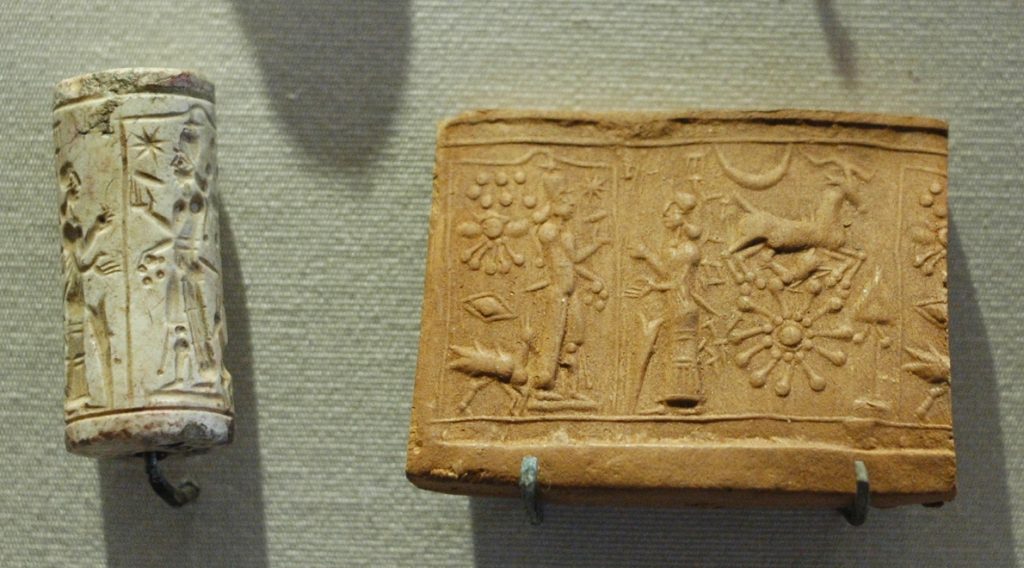
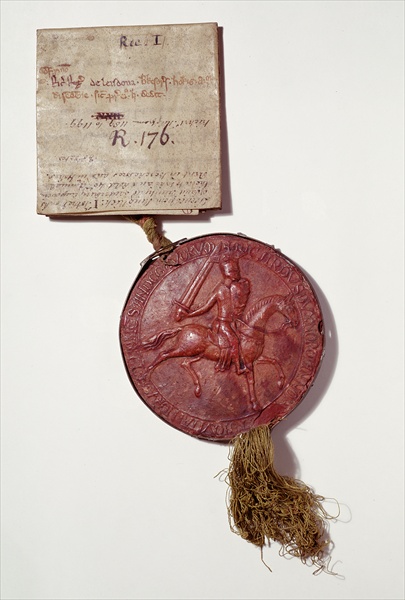
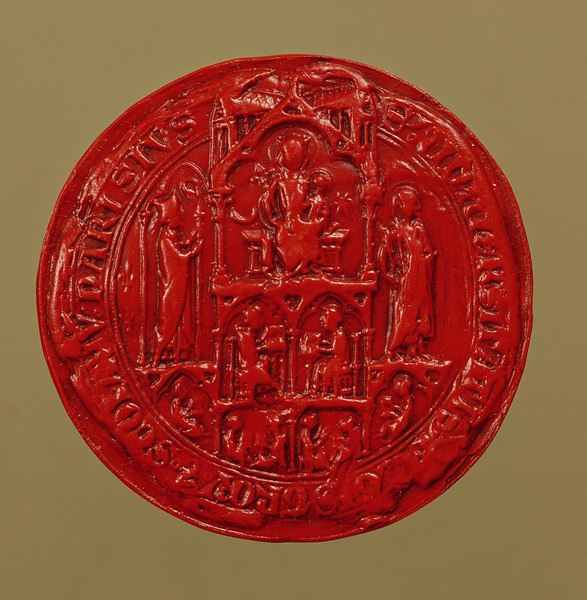
For my historical artifact I chose wax seals admittedly on a whim, I knew on a surface level I thought they were aesthetically pleasing, but I was very surprised to see how much wax sealing is connected to visual communication. I think out of all the projects thus far I was the most engrossed in this research than any, because of the revelation that seals were the start of branding as a whole. 

Mesopotamian Cylinder Seal
Seal of King Richard I
Seal of the University of Paris

I also greatly enjoyed the process of making a wax seal, I never thought I’d do something like this. It was a nice challenge! I sculpted the stamps out of clay and carved and pressed designs into it before baking. After the stamp set, I placed wax beads into a metal spoon over a candle. As the wax melted I poured it onto the paper and pressed my stamp onto it. It’s a relatively simple process but some things made me have to try multiple attempts. Sometimes the wax would be too runny when I left it on the candle too long so it would show the paper through in some spots. I have also run into a problem with the stamp, where I forgot to dunk it in oil before pressing it into wax and after all the wax stayed and got stuck in my stamp! In a panic, I tried to hold my seal over the candle to get the wax out, but it just ended up burning my stamp, forcing me to make a new one. I enjoyed the whole process nonetheless.

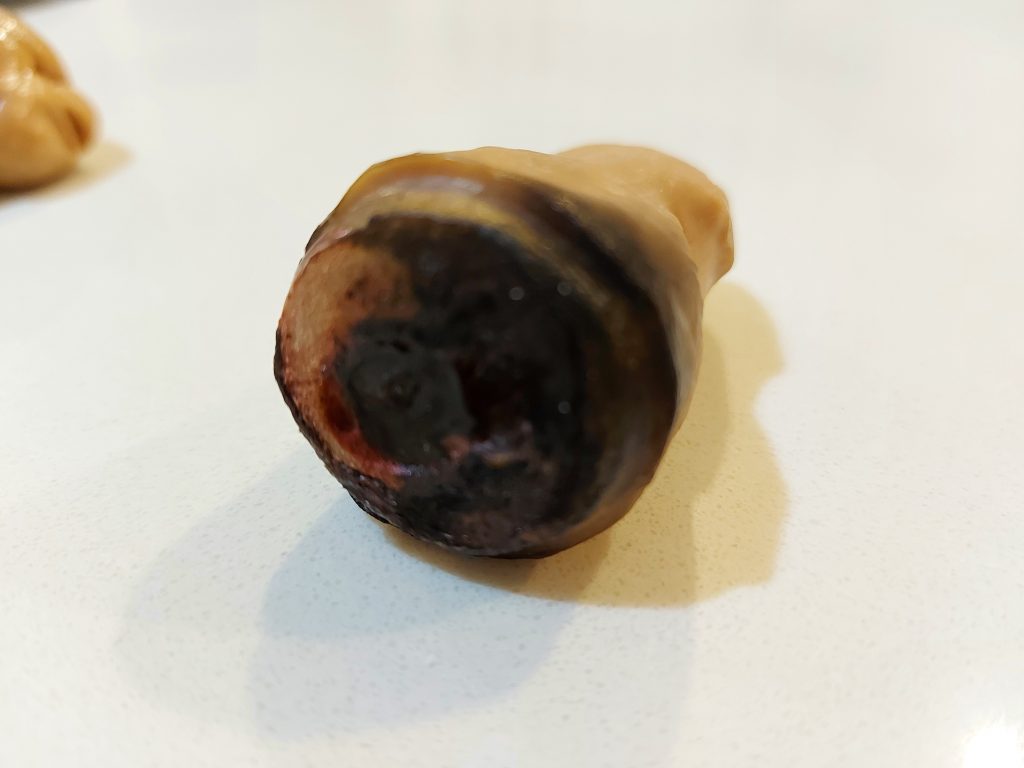
My clay stamps!
The aftermath of my first botched attempt at pressing a seal.

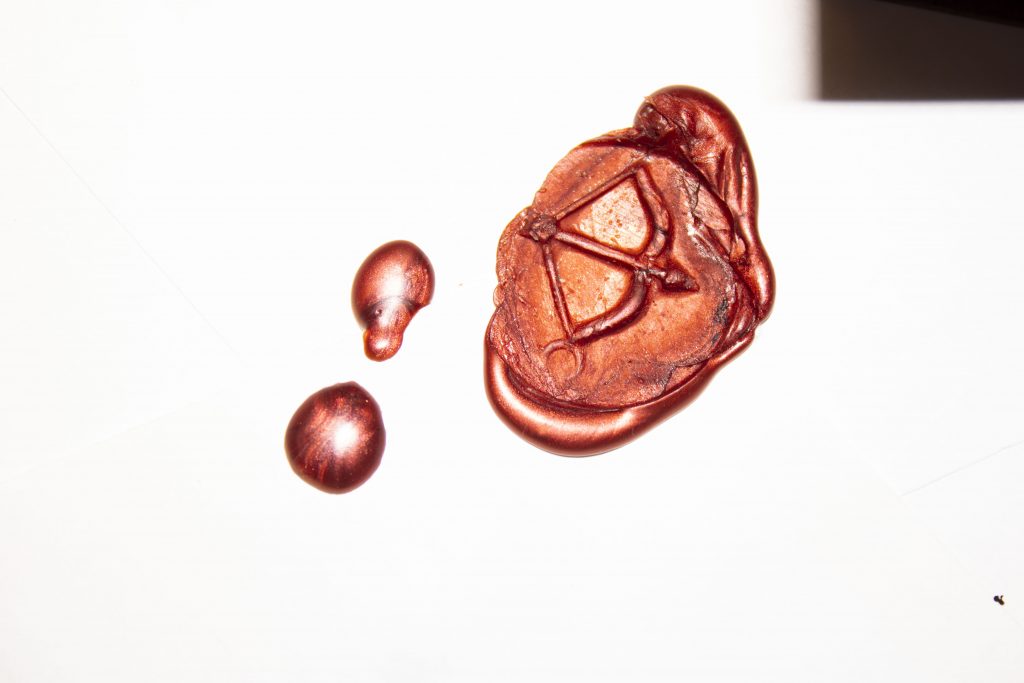
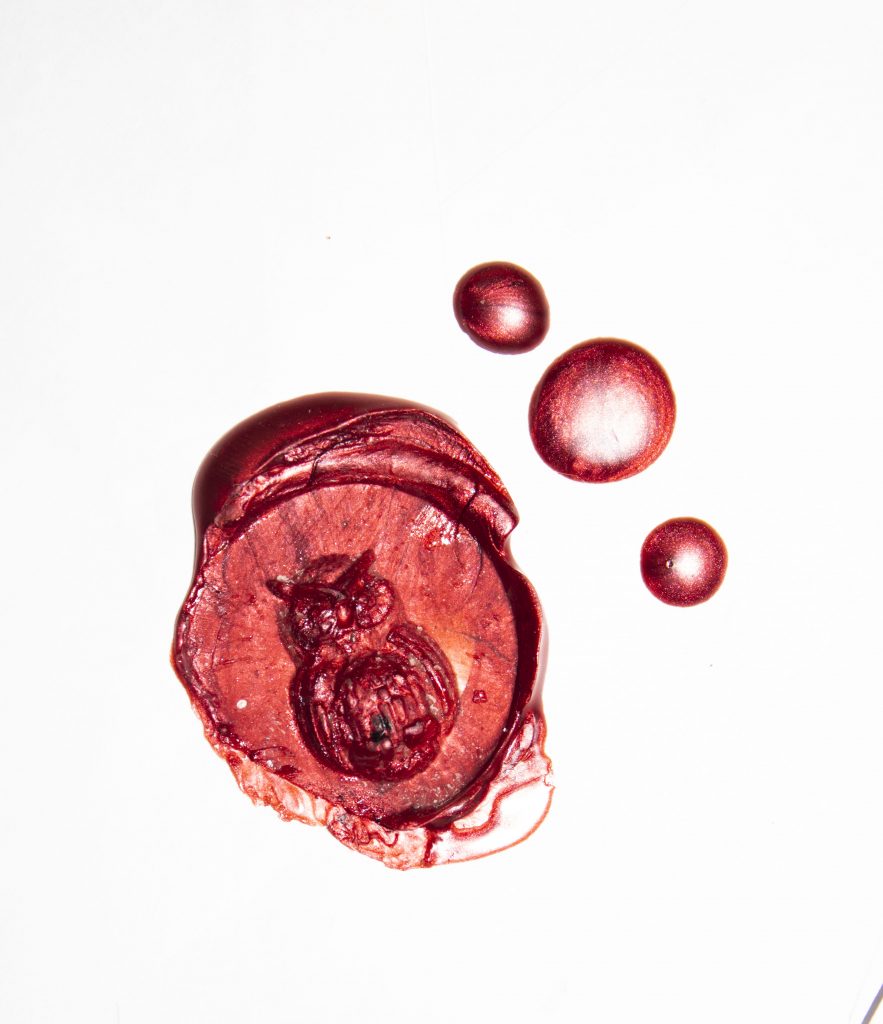
My two wax designs are a bow and an owl. I had both an owl and bow charm that I could press into the clay, like how people in the middle ages used their jewellery to imprint seals. I think they both turned out quite nicely.

My wax bow and arrow design.
My wax owl design.

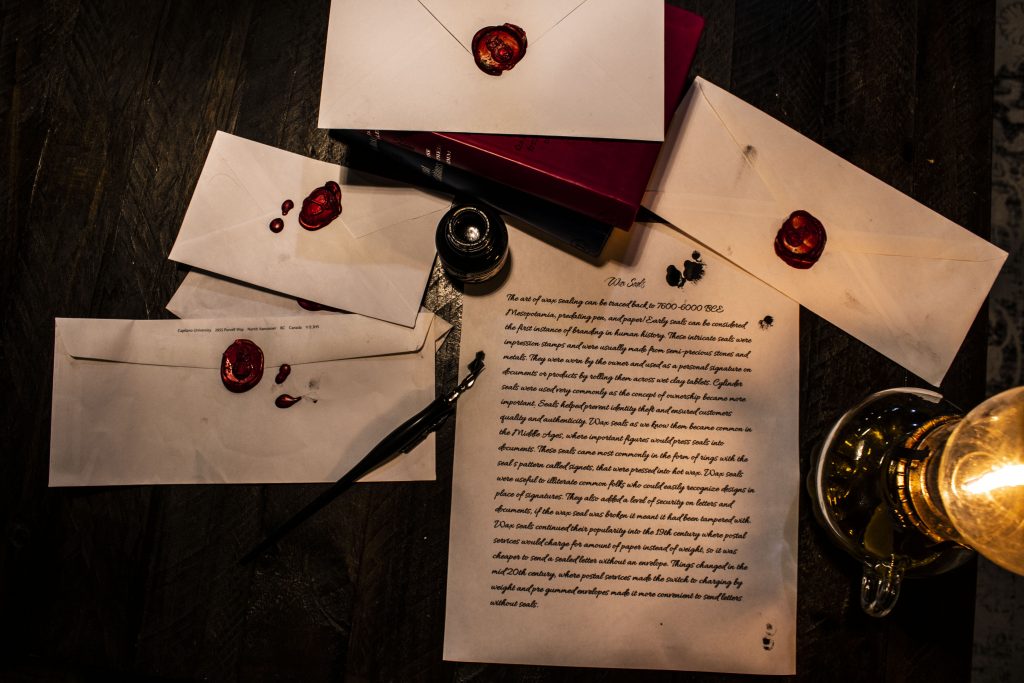
For my picture, I set up my artifacts and label on my wooden table to enhance the rustic look of it. I also added an ink bottle with a calligraphy pen and an oil lamp to add to the accuracy of the time period. To make my label fit more naturally in with the picture, I chose a cursive font and added ink splotches around the edges.

The only major gripes I had with my performance is trying to find more time in the week to design a family crest to showcase more variations of the trends of designs prevalent in wax seals. I also think that my composition in my photograph, although atmospheric, doesn’t showcase the details of my wax seals the best. I spent 10 hours on this project and I’d give myself an 8.8/10.

References

Encyclopædia Britannica, inc. (n.d.). Sealing wax. Encyclopædia Britannica. Retrieved November 10, 2021, from https://www.britannica.com/technology/sealing-wax.

The history of Wax Seals and sealing wax. ARTISAIRE. (n.d.). Retrieved November 10, 2021, from https://artisaire.com/blog/the-history-of-wax-seals-and-sealing-wax/.

Mark, J. J. (2021, November 8). Cylinder seals in ancient Mesopotamia – their history and significance. World History Encyclopedia. Retrieved November 10, 2021, from https://www.worldhistory.org/article/846/cylinder-seals-in-ancient-mesopotamia—their-hist/.

Mesopotamian cylinder seals. History. (2017, May 11). Retrieved November 10, 2021, from https://www.historyonthenet.com/mesopotamian-cylinder-seals.

Survey #4 – The Creators of Your Childhood: Brothers Grimm

Fairy tales before Grimm

Of course, it’d be preposterous to say that every fairy tale started with two brothers. Ancient stories have been told exclusively orally thousands of years ago. Because of this, it’s hard to know who created these stories, and the context surrounding them. The start of our knowledge of these tales begins before the Judaeo-Christian era; scribes began documenting various aspects of their culture including religious anecdotes and folktales. The recording of these stories has been highly influential to humanity. They preserved the tales and knowledge for future generations. Because these once exclusively oral stories went through adaptations they slowly morphed through every iteration. These stories also influenced each other and sometimes melded together. Fairy tales and folktales have been so prevalent throughout history even out-dating writing, it’s as if storytelling is an inherent nature of humans.

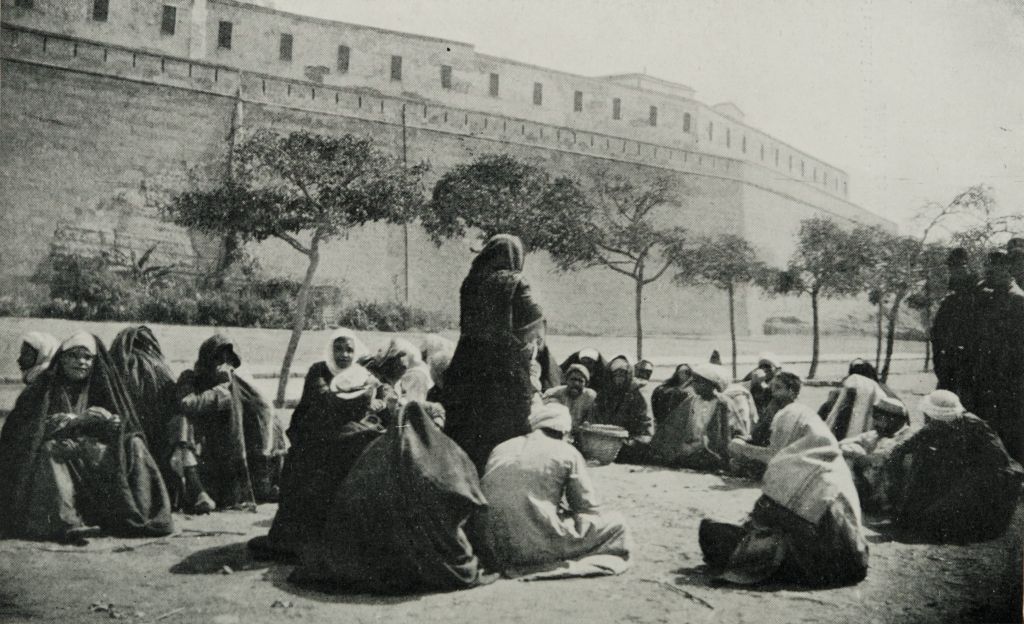
A Story-teller reciting from the “Arabian Nights” (1911) Although important, there is an intimacy lost when transcribing oral stories to paper.

Literary Masters

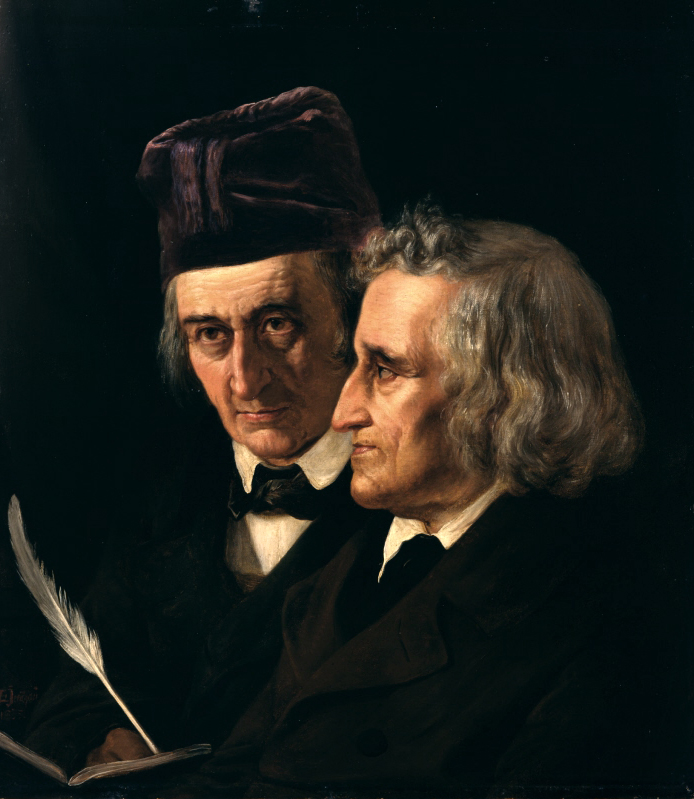
“Brothers Grimm” refers to Jacob and Wilhelm Grimm. Jacob and Wilhelm were born in Hanau a town in Germany. Jacob was the more book smart of the two while Wilhelm had an artist’s heart. They were the oldest in the family out of five siblings, so they were both saddled with the responsibility of the family after the death of both of their parents. Jakob and Wilhelm Grimm attended the University of Marburg and both found their love of history and folk poetry there. After graduating they continued their literary research and took on a project to collect historic folk songs in 1805. This project was a launching point for the brothers, they would continue to record fairy tales from different backgrounds and points in time. The Grimm brothers later published this collection under the name “Kinder- und Hausmärchen”. The book held two hundred tales including “Snow White,” Sleeping Beauty,” and “Little Red Riding Hood. The brother’s main goal was documenting the imagination of humanity, and ethos of the culture and time the stories were born in. 

Wilhelm Grimm and Jacob Grimm (1855) by Elisabeth Jerichau-Baumann

Grim(m) Stories

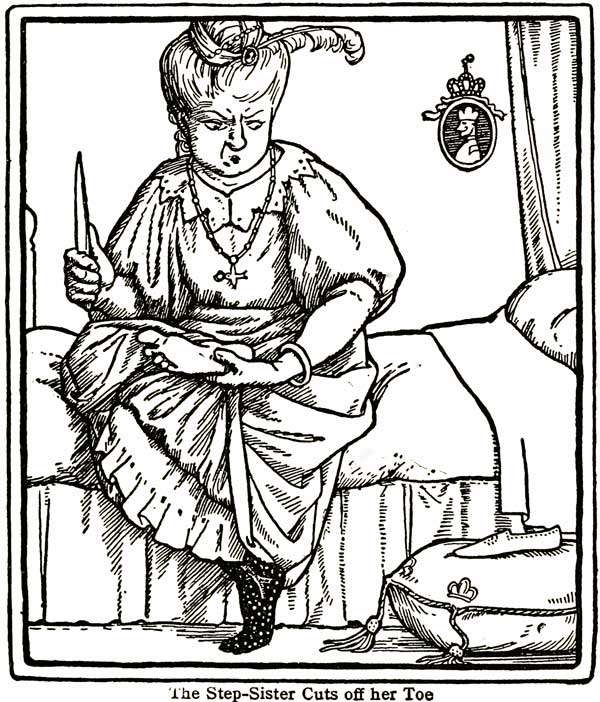
The original Grimm fairy tales are now known to be infamously dark compared to the versions we are exposed to these days. These stories would not shy away from graphic violence, sexual assault, incest, and child abuse. Although interestingly, the Grimm brothers already slightly toned down the tragedy in these stories. Today we find these texts shocking and disturbing, especially for media aimed at children but at the time these fairy tales were already the sanitized version.

An Illustration of the original events that took place in Grimm’s version of Cinderella. It’s quite disturbing for a children’s story.