
LBST 200 Module 5 Assignment

LBST 200 Module 5 Assignment

Niko Brown
LBST 200
November 15th, 2018

Module 5 Assignment
2010 Olympic Games Committee

The Olympic Games Committee and its contributions to British Columbia were responsible for maximizing the benefits of the 2010 Olympic Games in British Columbia. The games could provide the community with tourism, sport, education, arts and cultural activities, recreation, investment. The committee was established in 2003, seven years prior to the Vancouver Olympic Games. The committee was responsible for all the preparations and organization of the Olympic Games throughout British Columbia. The committee was in communication with the districts of West Vancouver, North Vancouver, Vancouver, and more. How did the 2010 Olympic Games Committee prepare for the 2010 Winter Olympics?
The main source is a letter written to a Dr. Lee from the District of West Vancouver. The letter is dated from July 14th 2005 regarding the 2010 winter Olympics and the potential opportunities predicted for the District of West Vancouver. The letter states that the games could provide the community with tourism, sport, education, arts and cultural activities, recreation, investment. (Wood, 2005) Anything pertaining from the letter regarding the date of its creation is around the preparation beginning from 2003 and planning till 2010. The community is predicted to reap the benefits of the Olympics before, during, and after the 2010 games. From the time the letter is written, it is clear that much has been done since 2003 and there is much more to do. The letter is not very descriptive about the past work done, since it only provides a summary for the creation of the committee under the District of West Vancouver. I would like to know more about the communities planning in the future towards the games before 2010.
Regarding the committees’ preparation and the establishment of the West Vancouver 2010 Olympic Select Committee in the fall of 2003; the 2010 Olympic report produced by the District of West Vancouver Selected by 50th Anniversary History Team is a valuable secondary source as it created roughly around the same time as the letter and goes over the history of the 2010 Olympic Committee in great detail. A 2010 Committee report to the council from the district of West Vancouver which would further my analysis on the committees’ preparation and establishment. The purpose of the report was to tell the council progress currently and plans moving ahead.
A small poster regarding voluntary enlistment to West Vancouver’s 2010 Olympic Committee would help me find information regarding the formation of the committee prior to the written letter. The fonds of the Vancouver Organizing Committee for the 2010 Olympic Games from the City of Vancouver archives is another valuable source as it lists some involvement from the committe. The fonds list all the members involved in the committee, some venues, and top Olympic champions. A CBC news article regarding the debt from the games and the revenue produced through the committee brings in an example of the results and overall efficiency of the Olympic committee after the games. The article states “CEO John Furlong announces dissolution of committee, revenues and expenses just shy of $1.9 billion”. (CBC News, 2014) The article also goes over information regarding the debt left over and the most expensive infrastructures built under the committees’ control. Former Vancouver Olympic Committee CEO John Furlong claimed that the cost was all necessary and the entire process was worth it.
In conclusion, the 2010 Olympic Select Committee was created to reap the benefits and prepare for the 2010 Vancouver Olympic Games as best as possible. From the reports listed, it seems the districts are mostly in agreement that the committee was successful. High costs and debts were justified through future sustainable benefits such as tourism, and new efficient system and building for locals. The 2010 Vancouver Olympics made the city of Vancouver ever more popular and that too increased tourism which is bringing in a lot of money for years to come. The letter written to a Dr. Lee from the District of West Vancouver described how the committee prepared for the event by asking local residences, attending committee meetings, and more. Due to the evident results and overall success, it is safe to say the committee was well prepared was given ample time.
My method of inquiry would be a content analysis observing materials such as archival sources with preferable at least one primary source such as the letter listed in my bibliography. I find this approach efficient since I would present my data in the form of an essay. I would find the simple paragraph structure adequate to present my information in order of importance with supporting paragraphs.

Bibliography
R, K. Wood. “2010 Winter Games Will Provide Opportunities for the District of West Vancouver.” Capilano University, THE CORPORATION OF THE DISTRICT OF WEST VANCOUVER , 14 July 2005.
2010 Olympic/Paralympic Report.” Capilano University, 10 May 2005
Committee Report to Council.” Capilano University, 10 May 2005.
Call for Volunteers.” Capilano University, 2 Nov. 2003.
“Fonds AM1550 – Vancouver Organizing Committee for the 2010 Olympic and Paralympic Winter Games (VANOC) Fonds.” Vancouver Organizing Committee for the 2010 Olympic and Paralympic Winter Games (VANOC) Fonds – City of Vancouver Archives, 1995 – 2011
“No Debt from Vancouver Olympics, Final VANOC Report Says | CBC News.” CBCnews, CBC/Radio Canada, 4 July 2014.
LBST 200 Framing Reflection #2

LBST 200 Framing reflection #2

Niko Brown
101004867
Liberal Studies 200
December 7th, 2018

Framing Reflection #2

Before taking the course, I was expecting to learn mostly on improving my research skills in the interdisciplinary studies. The most prominent skill learned from this course was interviewing and efficiently using it within research projects through surveys. Otherwise my skills in research and analysis were slightly improved on. The small quizzes were a challenge as the articles were sometimes very long with unfamiliar and complex information. The articles were dense with information which made it difficult to understand and memorize. However, this improved my ability to be able to absorb a lot of complicated information and present in a logical and organized fashion. Qualitative and quantitative research resonated with and was helpful as it was heavily involved in my other courses I was taking alongside during the term and will be in my future terms. LBST 200 has a very broad focus regarding research, hence its interdisciplinary focus. That being said, I could use what I have learned through the arts and sciences and help strengthen much of my academic career. Personally, I enjoy writing essays that are custom to my own structure of writing and context, and research is a large part of that, so that relates to my own interests. How these skills affect me after my studies, I have no idea, but I can definitely see how LBST 200 will be helpful in completing my Bachelor of Arts, besides the fact that I have to take and pass the course to graduate. Overall, LBST 200 was a helpful addition to further completing my liberal arts degree and I hope to use what I have learned in my future studies.

LBST 200 M6 Assignment Digital Folio

LBST 200 Digital Folio M6 assignment

The Value of a Bachelor of Arts
Niko Brown
LBST 200
December, 3rd 2018

Over time, the rate of students earning university degrees has increased. This overwhelming increase in students graduating with a university level degree has shifted the demand for university level education. As a result there is a higher labor supply for less labor demand, which leads to wage reduction. Generally students go to school to get a job that earns an adequate salary to pay off their students’ loans and find financial stability. However, since the higher labor supply leads to wage reductions, the value university level education is negatively affected. All this has cause some to question if university level education is losing its value or more simply if a university level degree is losing its value. The goal of this research paper is to explore and answer this question specifically under a Bachelor of Arts degree. The paper draws from interviews and the use of supporting academic and secondary sources, including an article exploring Capilano Universities stance on the problem.

To understand and get a view of how a population of students going through the process of earning a bachelor of arts; interviews were held with about five students on campus. The goal of the interviews was to bring clarity on whether students agree that earning a Bachelor of Arts degree has lost its value overtime, as well as to find out why they think so and what could be done differently to improve the struggle. After making sure the interviewee agreed to an interview, understood the goal of the interview, and that they were in a Bachelor of Arts program; the interview would then be conducted. The first question asked was simply “do you think Bachelor of Arts degrees are losing value?” All but one of the participants stated that earning a bachelor of arts has depreciated in value. One interviewee answered that in modern day’s society, there is a notion that everyone needs a degree to get a well-paying job; otherwise you stand out poorly. Interestingly, another interviewee answered that in the past people generally stood out if you had a university degree such as a bachelor of arts; however today that is no longer the case as it is the other way around. Typically in North America, you fit in a much broader population since more people have a bachelor of arts than compared to before. Interestingly, an interviewee stated that a bachelor of arts have actually increased in value. He claimed that since more companies now require you to have a degree, they have actually become more valuable in that sense. However, he claimed that the idea of the decrease in value shows when people pay tuition for a four year Bachelor of Arts degree that does not lead to a job or any professional institution only makes it look like they have lost value. It seems his point is that people think overestimate how versatile a bachelor of arts actually is and should not use them to apply to a broad range of the workforce.

The second question asked was “what gives value to a Bachelor of Arts degree and how does Capilano University support that?” One person simply said because it’s a university degree that demonstrates you can absorb and understand a lot of information, then memorize and present in an organized and efficient fashion. This is an aspect of liberal studies to be sure. A few interviewees struggled to answer as to how the university itself supported this. One person said that Capilano becoming a university simply gives its degrees more credibility which raises their value, since employers care where you got your degree from.

The third question asked was “how has Capilano College becoming a University benefited you?” One interviewee answered that it has allowed for a more diverse array of degrees offered at Capilano and that in turn brings in more choice and opportunity, also getting a degree from a university looks better than a college. This answer reflects strongly on the answer from the first question regarding the versatility of a bachelor of arts and that people now have more of a choice at Capilano University to take other university level degrees more specific to their field of interest. This may present a solution in the sense that taking a more specific course driven degree may increase your likelihood of securing a job-placement in the future, due to the more focused background. Unfortunately, there is also the problem of universal validity of a Bachelor of Arts degree and university degrees in general.

A MacLean’s interview article on Capilano College becoming a University stated “Capilano graduates have had problems in the past with their degrees not being recognized by institutions outside of British Columbia.” The article also lists a famous example about a man called Dave Cryderman graduating from what was Capilano College back then with a bachelor’s degree in music, and using that to apply to teachers college to become a music teacher in Ontario. The problem was that he could not apply due his degree not being recognized outside of British Columbia. (Carson, 2008)

The peer-reviewed article titled Not All Degrees Are Created Equal goes over this problem in greater context. According to the article, Canada has no national accreditation body. (Millar, 2007) In other words, each province has its own rules on what governs a university level degree. This inconsistency causes confusion around students and overall can have effects on the legitimacy of a bachelor of arts which affects its credibility and overall value. The article also brings up further dilemma by quoting the registrar of Queen’s University stating that “students coming from colleges are not necessarily prepared to pursue further education.” (Millar, 2007) Dave Marshall, president of Mount Royal College in Calgary, is summarized as saying that there are many different types of degrees with different strengths and weaknesses; some prepare students for a career and others for further study. (Millar, 2007) Dr. Greg Lee, who was president of Capilano College during the time this article was published back in 2006, is stated as saying that now that Capilano College is an independent university, it can provide its own university level degrees, however they are still the same degrees as before with also the same level of credibility as before. (Millar, 2007) Finally the article raised one last helpful point which was that students simply just do not think about what they want to do in the future after post-secondary; they just apply to university and not knowing where their final destination is. Instead many students are thinking about what they want to do after they graduate. (Millar, 2007)

In conclusion, both the interviews and articles introduced that there are multiple ways to look at considering the value of a Bachelor of Arts degree. Maybe students need to adjust their expectations, maybe students need to have a clearer plan before starting a Bachelor of Arts degree, or maybe students should not take a Bachelor of Arts degree if they are not interested in the liberal arts and just interested in having a degree. However, despite my findings, it still seems that most students are hoping to get some sort of professional success in the work force with an adequate salary from receiving a Bachelor of Arts Degree. On this premise, the value of a Bachelor of Arts Degree has definitely depreciated over time as there is an increasing supply of Bachelor of Arts graduates with a decreasing demand for them. Yet more students are going to school to earn one as more jobs require them in order to be able to distinguish valuable employees, but since so many students have them; there is not nearly as much demand. This lack of demand results in increased unemployment for graduate students. The problem is a Bachelor of Arts Degree is in such great supply that it no longer distinguishes people as well as it used to.

Bibliography
Jerema, Carson. “The Birth of Capilano University.” Macleans.ca, Macleans.ca, 25 Apr. 2008.
Not all degrees are created equal By: Millar, Erin, Maclean’s, 4 Feb. 2007, Vol. 120, Issue 12

LBST 200 Module 4 Assignment

Niko Brown
LBST 200
October 19, 2018

Module 4 Assignment

1. 2010 Winter Games will provide opportunities for the District of West Vancouver from Capilano University Data Base.
2. The document is a letter written to a Dr. Lee from the District of West Vancouver. The letter is dated from July 14th 2005 regarding the 2010 winter Olympics and the potential opportunities predicted for the District of West Vancouver. The letter states that the games could provide the community with tourism, sport, education, arts and cultural activities, recreation, investment. (Wood, 2005)
3. The original function and intended purpose of the letter was to notify President Lee the overview of the process the committee had come up with and the work they had implemented. The letter went into detail through certain dates pertaining to the consultation process in order to explain how the committee achieved their mandate. The letter also stated that there would be a brochure released in the coming months and that the committee had presented their recommendations to the council. The letter made it clear that the committees work was now complete but the communities planning had just begun.
4. There are no arguments presented within the letter. The letter is from a reliable source since it directly written from a member of the 2010 Olympic Council Committee.
5. Anything pertaining from the letter regarding the date of its creation is around the preparation beginning from 2003 and planning till 2010. The community is predicted to reap the benefits of the Olympics before, during, and after the 2010 games. From the time the letter is written, it is clear that much has been done since 2003 and there is much more to do.
6. Due to the thorough explanation of how the council put together a committee to organize how to best maximize the benefits of the 2010 Winter Olympics; there could be question regarding the achievement of the West Vancouver District’s preparation. The letter could easily support a thesis questioning How the District of West Vancouver prepared for the 2010 Winter Olympics?
7. As stated in question six, the letter described how the committee prepared for the event by asking local residences, attending committee meetings, and more. I would look for secondary sources or more primary sources regarding the committees’ preparation to gain more information to analyze. I would also research the establishment of the West Vancouver 2010 Olympic Select Committee in the fall of 2003 for even more information to draw from. Overall I would do a content analysis and present my findings in order of importance of context.
8. Since I would be doing a content analysis, I would present my data in the form of an essay as I would find the simple paragraph structure adequate to present my information in order of importance with supporting paragraphs.
9. The letter is not very descriptive about the past work done, since it only provides a summary for the creation of the committee under the District of West Vancouver. I would like to know more about the communities planning in the future towards the games before 2010. I am sure information on this would not be difficult to find as the 2010 Winter Olympics was a turning point for Vancouver and British Columbia all together. There are probably many fonds of this information in the North and West Vancouver Districts’ archives.
10. As stated in question seven I would look for more secondary sources regarding the committees’ preparation and the establishment of the West Vancouver 2010 Olympic Select Committee in the fall of 2003. The 2010 Olympic report produced by the District of West Vancouver Selected by 50th Anniversary History Team would be a valuable secondary source as it created roughly around the same time as the letter and goes over the history of the 2010 Olympic Committee in great detail. Another would be a 2010 Committee report to the council which would further my analysis on the committees’ preparation and establishment. A third secondary source would be a small poster regarding voluntary enlistment to West Vancouver’s 2010 Olympic Committee. This would help me find information regarding the formation of the committee prior to the written letter. My fourth source would the fonds of the Vancouver Organizing Committee for the 2010 Olympic Games from the City of Vancouver archives. The last source would a CBC news article regarding the debt from the games and the revenue produced through the committee to bring in an example of the results and overall efficiency of the Olympic committee after the games.

Bibliography
R, K. Wood. “2010 Winter Games Will Provide Opportunities for the District of West Vancouver.” Capilano University, THE CORPORATION OF THE DISTRICT OF WEST VANCOUVER , 14 July 2005.
2010 Olympic/Paralympic Report.” Capilano University, 10 May 2005
Committee Report to Council.” Capilano University, 10 May 2005.
Call for Volunteers.” Capilano University, 2 Nov. 2003.
“Fonds AM1550 – Vancouver Organizing Committee for the 2010 Olympic and Paralympic Winter Games (VANOC) Fonds.” Vancouver Organizing Committee for the 2010 Olympic and Paralympic Winter Games (VANOC) Fonds – City of Vancouver Archives, 1995 – 2011
“No Debt from Vancouver Olympics, Final VANOC Report Says | CBC News.” CBCnews, CBC/Radio Canada, 4 July 2014.

LBST 200 Module 3 Assignment

Niko Brown
LBST 200
October 19, 2018

Module III Assignment


My interview topic was on how the campus students felt about the amount of degrees offered at Capilano University. Our group came up with five open ended questions that would reveal how many students on campus felt about the amounts of degrees offered at Capilano University. I felt the topic we chose had much importance and would be an interesting topic to investigate for the interviewer and the interviewee.

After finding someone on campus that did not look busy, was open for a conversation, and most importantly was in a Bachelor of Arts program; I showed her my consent form that clearly explained my intentions and her rights and then asked for verbal permission if it was alright if interviewed her for about 15 minutes asking five questions about the amount of degrees offered at Capilano University. I urged her to answer the questions in any way she wanted and take them in any direction she wanted as that is the point of open ended questions. I felt I was clear with her about the point of the interview and that she was comfortable.

The first question I asked her was “How would you think earning a Bachelor of Arts from Capilano University will differ from other local universities such as UBC or SFU?” She answered that it depends on if you are going to go for your masters and the field of study you are in. Cap is a lot smaller and younger than UBC and SFU but it has a much closer community than other larger schools. Judging by the answer the interviewee focused the social duration of getting a Bachelor of Arts at Capilano University. The second question I asked her was “Why did you choose Capilano University to earn your Bachelor of Arts degree? She replied saying the location of Cap was convenient for her, she already knew lots of people here, and she liked the size of the population. She also said that she wanted to go to a smaller school but wanted to earn a degree not a diploma. I asked her “why not a diploma?” and she replied that she needed one for her program, and thought these days many careers require you to have at least one Bachelor of Arts degree.

The third question I asked her was, “What arts degrees would you like to have offered here?” She replied that she was not sure exactly what all the degrees are that are offered at cap but knew there are less than the much larger universities. She added maybe there should be either an online ballot or on campus vote from the student council regarding what degrees students would be interested to take at cap and whether they should be offered. Something like that would make it clear about the demand for the degrees that should be offered at cap. The fourth question I asked was “Why do you think Capilano University offered the arts degrees it has today?” She responded by saying that they were probably the most versatile and popular degrees that fit the market for the university. She also said many students transfer from cap so it does not matter as much if they are just racking up credits and course interests.

Next I asked her “With the number of students Capilano University has, how would it benefit the university to have more degrees?” She replied saying she was not sure exactly how the cost works but drew back from her previous answer on how much of cap’s population transfers to other post-secondary institutions so that would hinder the benefit of offering more degrees and is probably much of the reason why they have the ones they have in the first place. I then asked her “do you think it is worth offering more arts degrees for the population that does not transfer?” She replied saying that it might be of some benefit since it brings more choice but still concluded that it does not matter if many transfer and also that cap is still a young university and has grown much within the last ten years of it becoming a university back in 2008.

In closing, I thanked her for her participation. Overall my strengths as an interviewer where that I prioritized that the direction of the interview was open ended and maintained it be interesting and enjoyable. My weakness was that I probably should have elaborated a bit more on her answers and had more diverse questions.

LBST 200 Framing Reflection #1

Niko Brown
101004867
Liberal Studies 200
September 16th, 2018

Framing Reflection #1

The paradigm I am most strongly affiliated with is the critical paradigm. Historical realism fits my ontological perspective. I constitute reality as something that is shaped by values. As an emerging researcher, I prefer to be free from any existing regimes and beliefs. The critical paradigm attacks and questions assumptions of reality that we think we already know. I strongly relate to this as I question even popular theories that mostly believed to be true. I think it is important to understand where assumptions come from and why they are so popular believed. The critical paradigm can also relate to a lot of sociology assignments I have worked on as questioning stereotypes and other social theories is a part of sociology. Interrogating values and injustice exposes hegemony and injustice since that seems like the right thing to do. What I like about the critical paradigm is it just looks for the honest truth and I consider honesty to be underrated in most social worlds today. The idea of pulling back the curtain and revealing the true reality is very appealing and refreshing to me as it removes all the lies and simplifies how things are.

LBST 200 Module 2 Assignment

Niko Brown
101004867
Liberal Studies 200
October 4th, 2018

Observation Assignment

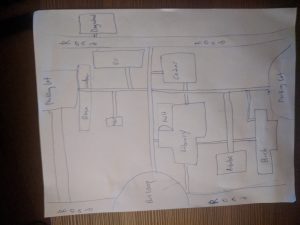
Capilano University’s campus layout is classified through eating, studying, parking, and hanging out. The grass field in front of the library is convenient for student to hang out and hosting large campus wide events. It is also convenient because it is in the center of campus and therefore near the bus stops and on the way to most buildings that students need to get to for class. The library being in the center makes a lot of sense since for every class, the library is useful and many students at least one point during term will have to visit. The library being in the center makes it the most accessible building on campus. The major cafeteria in the Birch building is near a large parking lot which is convenient for students who want to grab a bite before class starts. There are some buildings located near the edge of campus like the Facilities building which are mainly for campus staff and faculty. Locating building mainly for staff makes sense along the lines that they are not in the way of student’s convenience and are near parking lots. Campus has many stairs that take up the most convenient ways to certain areas such as parking lots and floor levels. This makes it difficult for the physically disabled that need ramps to get around campus. There are not many ramps and walking another way such as down the road on the edge of campus is not fair or convenient. Most of the ‘open’ areas are located within the center of campus and are enclosed by all the surrounding building that host students classes. This is great for students who like to gather in open areas to hangout and not be surrounded by noise and the busy campus life. Parking surrounds the campus and the two largest lots are on either side of the campus making them easily accessible. The child care day care is not accessible by students and is on the edge campus. The aboriginal center is located in the library which is great for aboriginal students who need to use their facilities. Overall Capilano University’s campus is efficiently structured to fit both student and staff needs.